Chico da Silva
Vida e Obra
Chico da Silva: Life and Work
Scroll down
07 October 2026
Um universo mágico povoado por animais fantásticos, folhagens exuberantes e cores vibrantes.
Chico da Silva created a world populated by fantastical creatures, lush foliage and vibrant colours. A Brazilian artist of Indigenous descent, he progressed from painting on the walls of houses to international recognition, developing a body of work shaped by an unfettered imagination. His career, marked by the collective practice of the Pirambu School and controversies surrounding the authenticity of his paintings, has been revisited through exhibitions that reveal the vitality and complexity of his legacy.
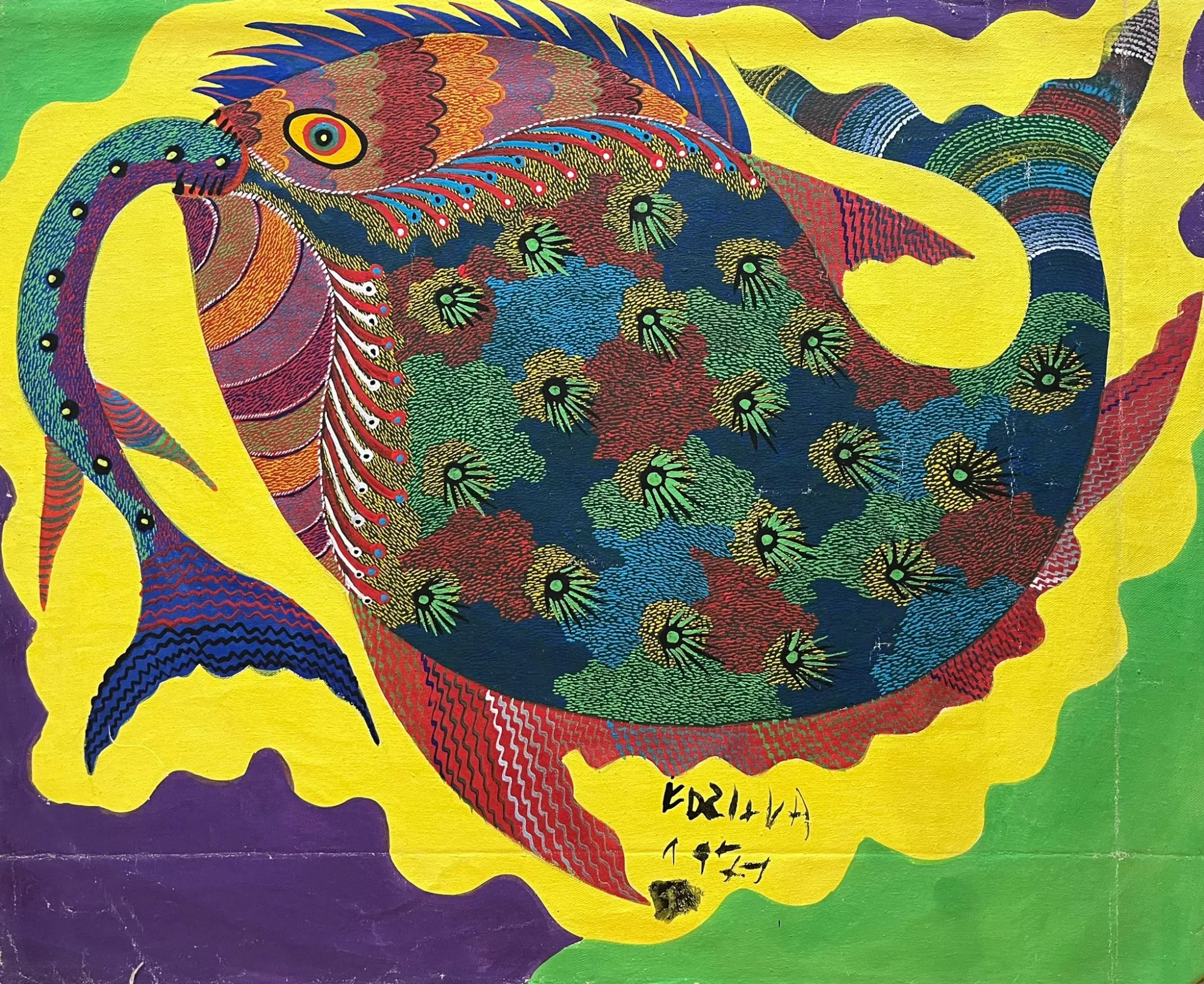
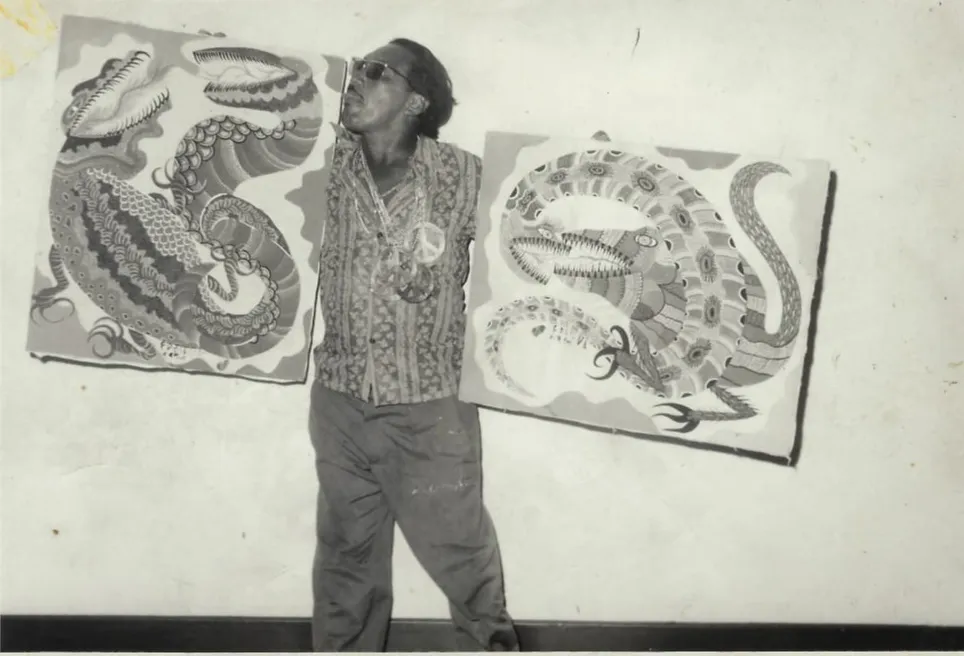
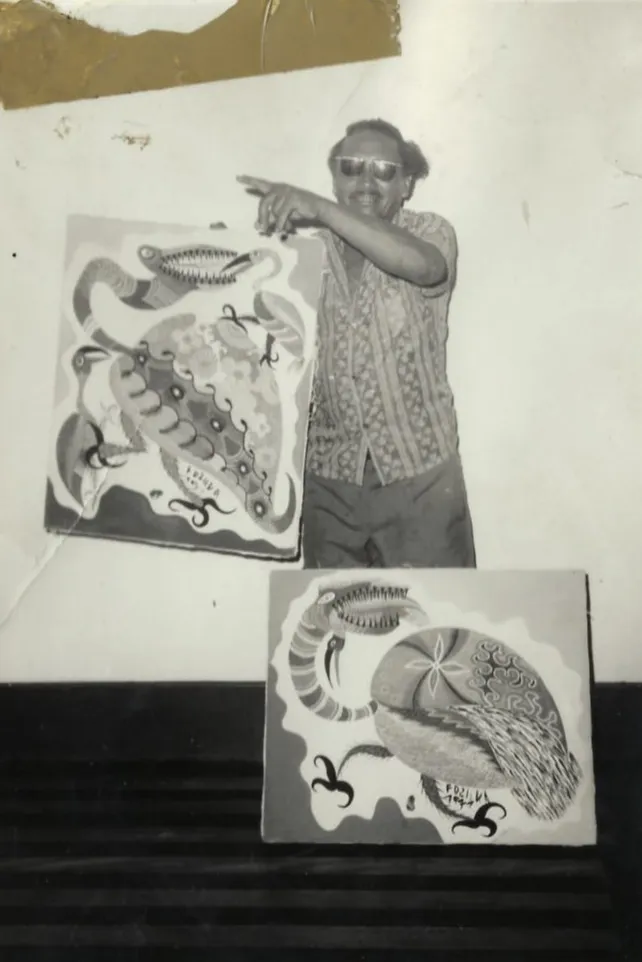
Francisco Domingos da Silva, known as Chico da Silva, was a Brazilian artist born in the state of Acre, widely recognised for his colourful figurative work, which gained popularity across Brazil between the 1940s and the 1970s.
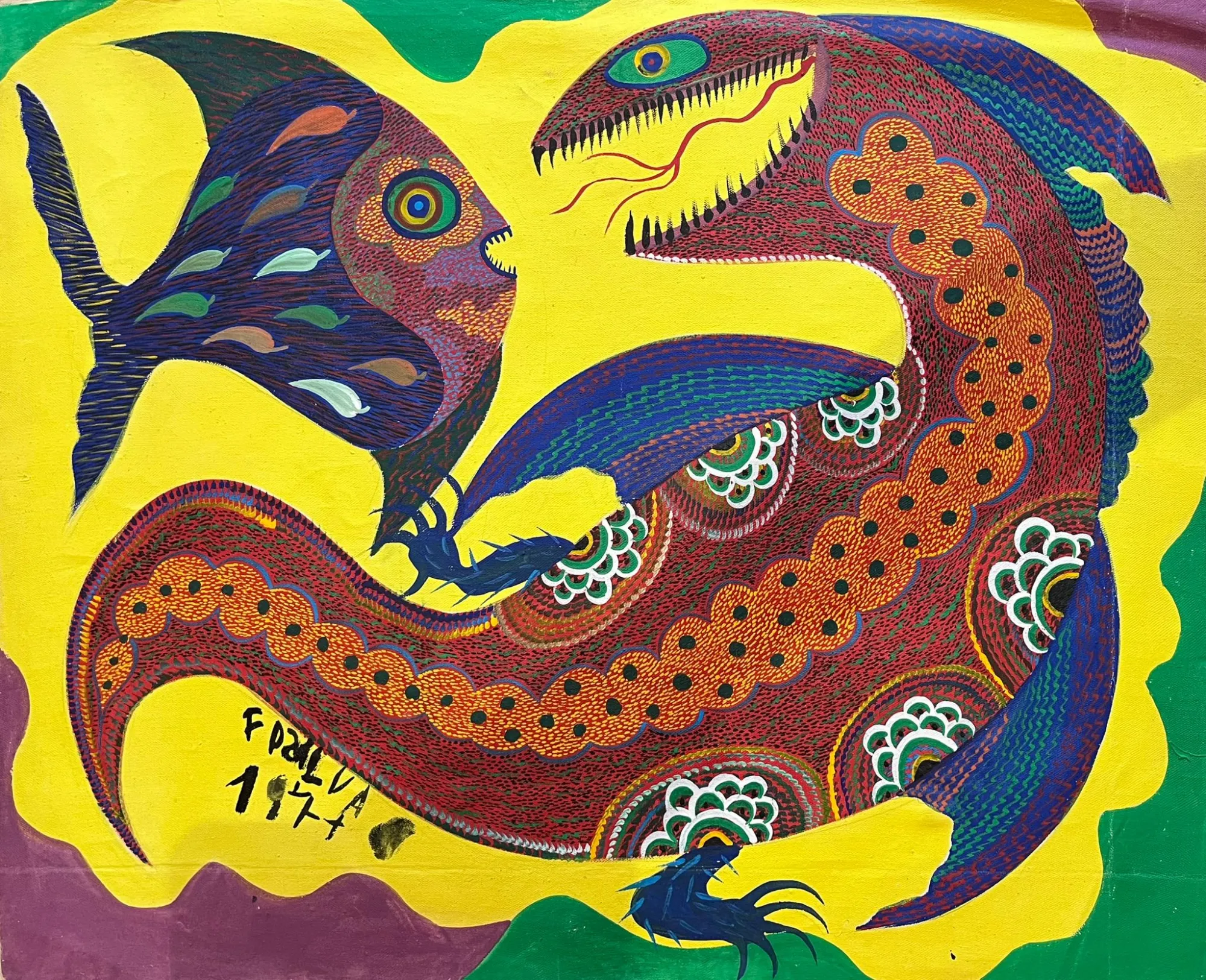
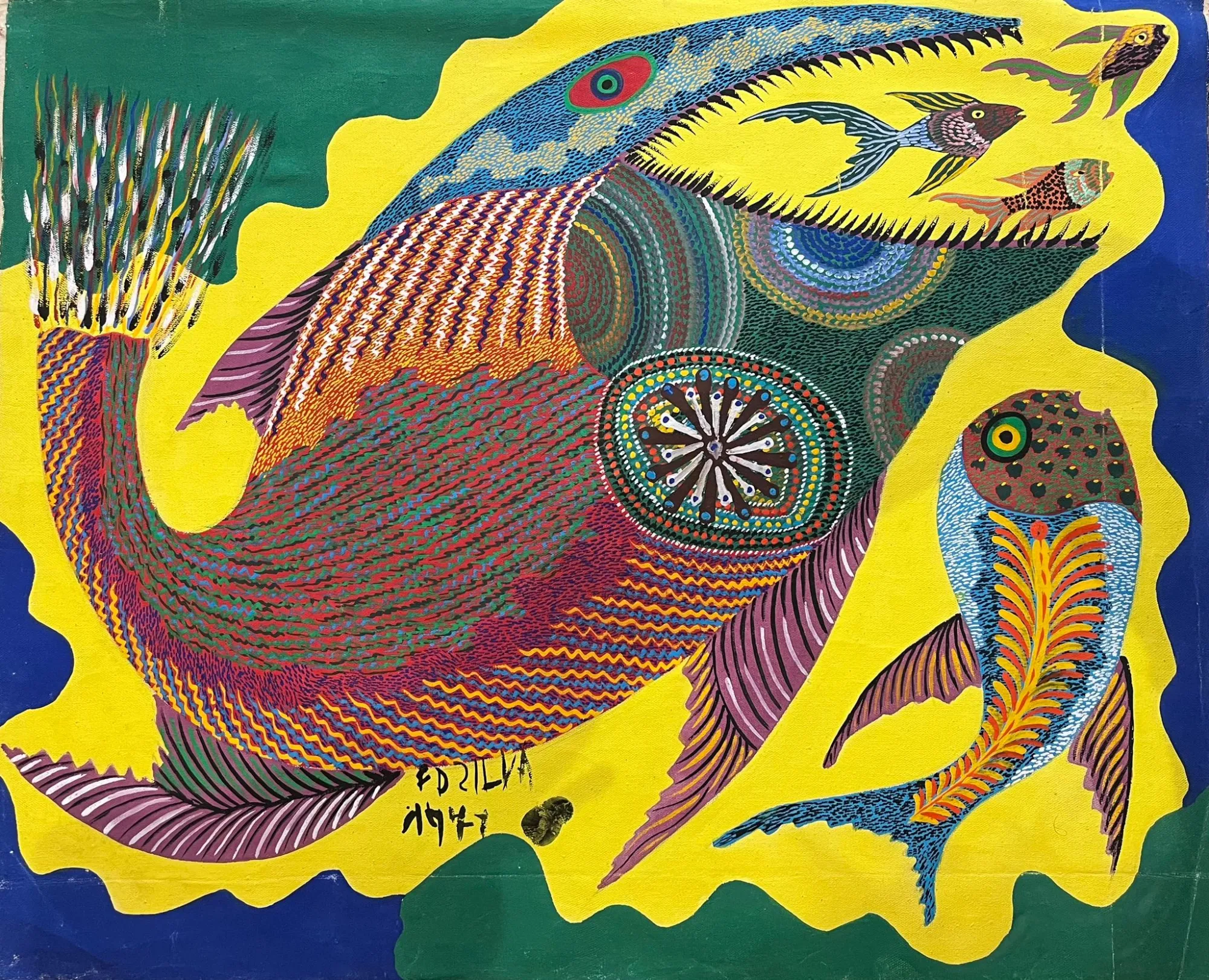
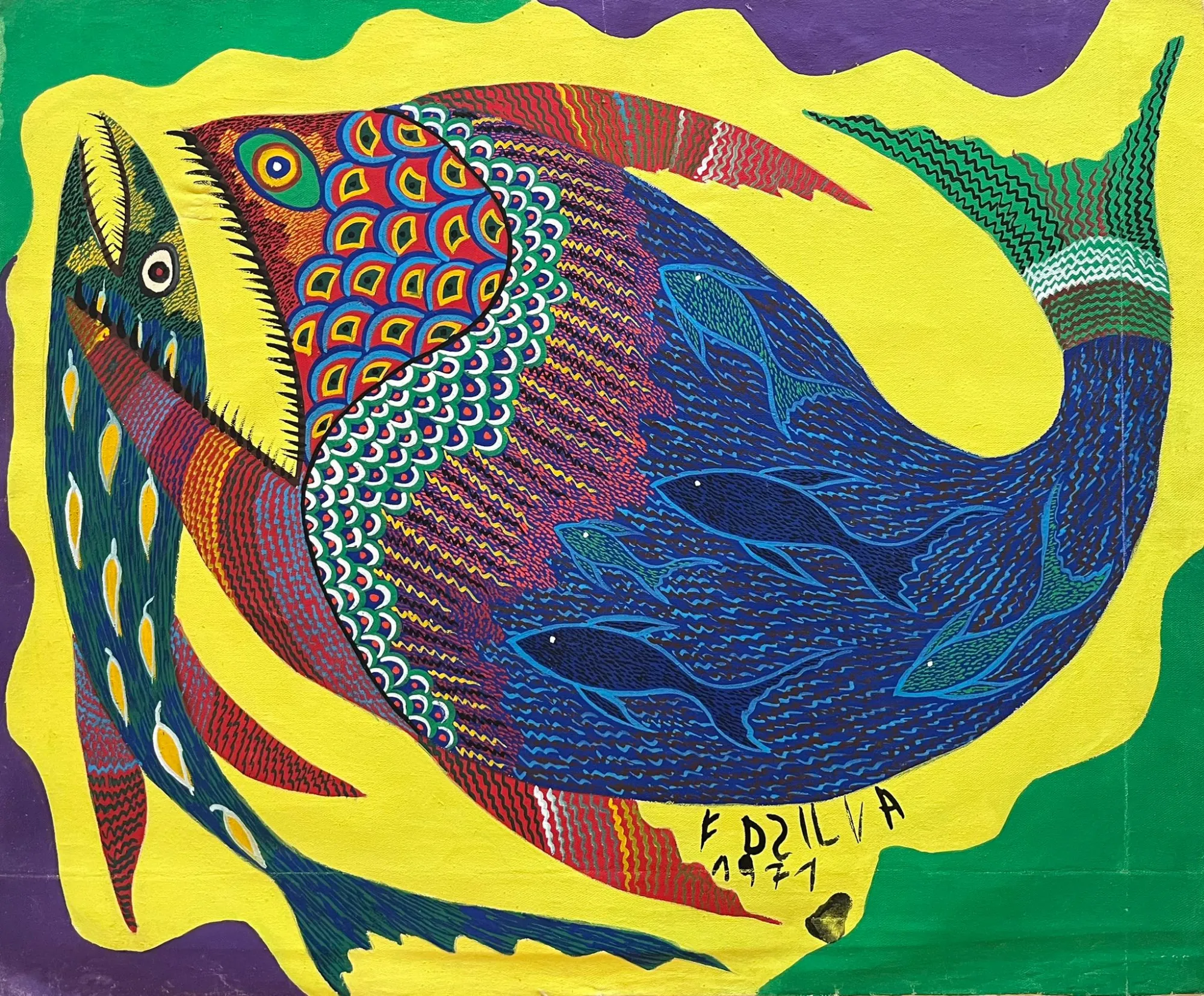
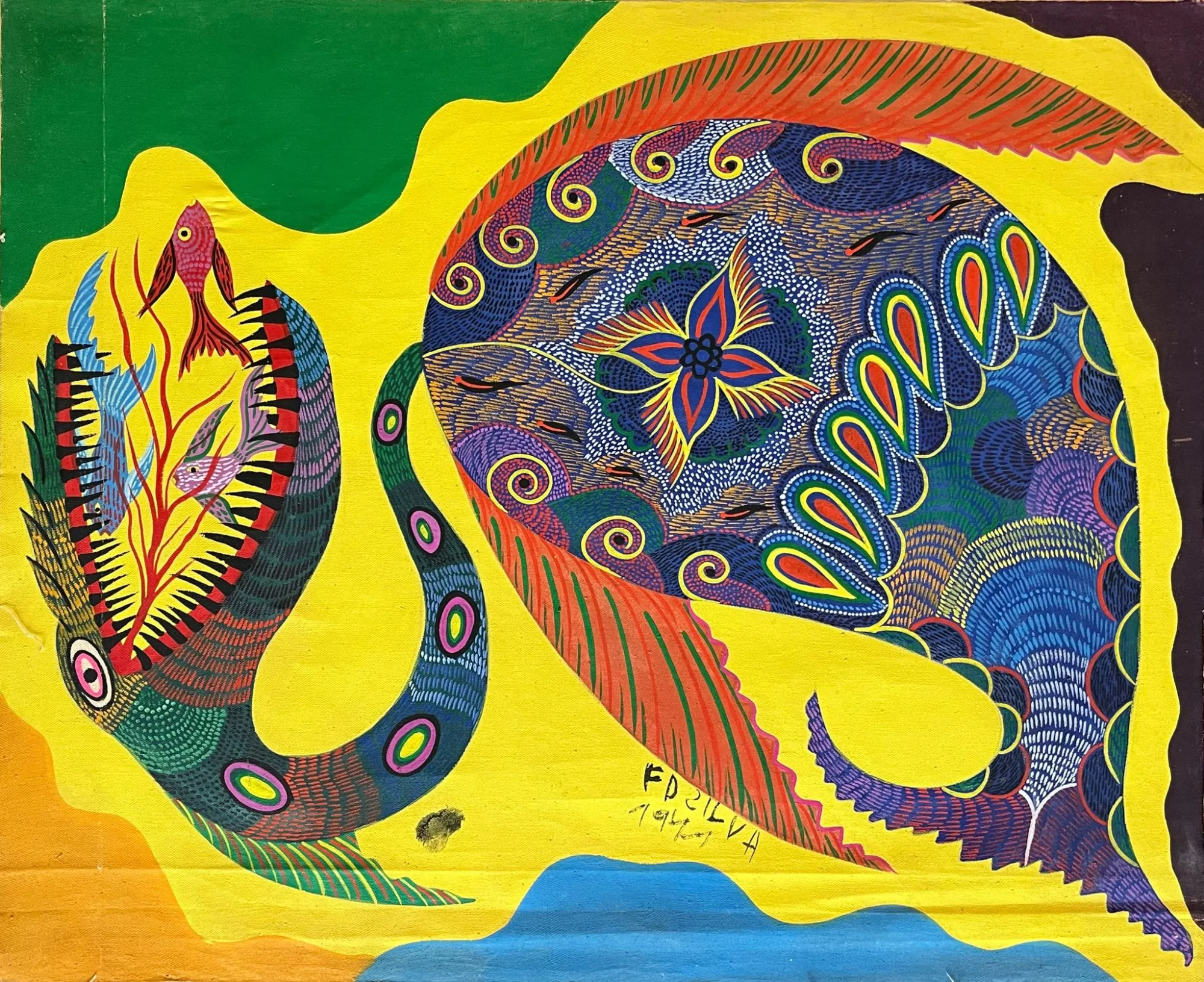
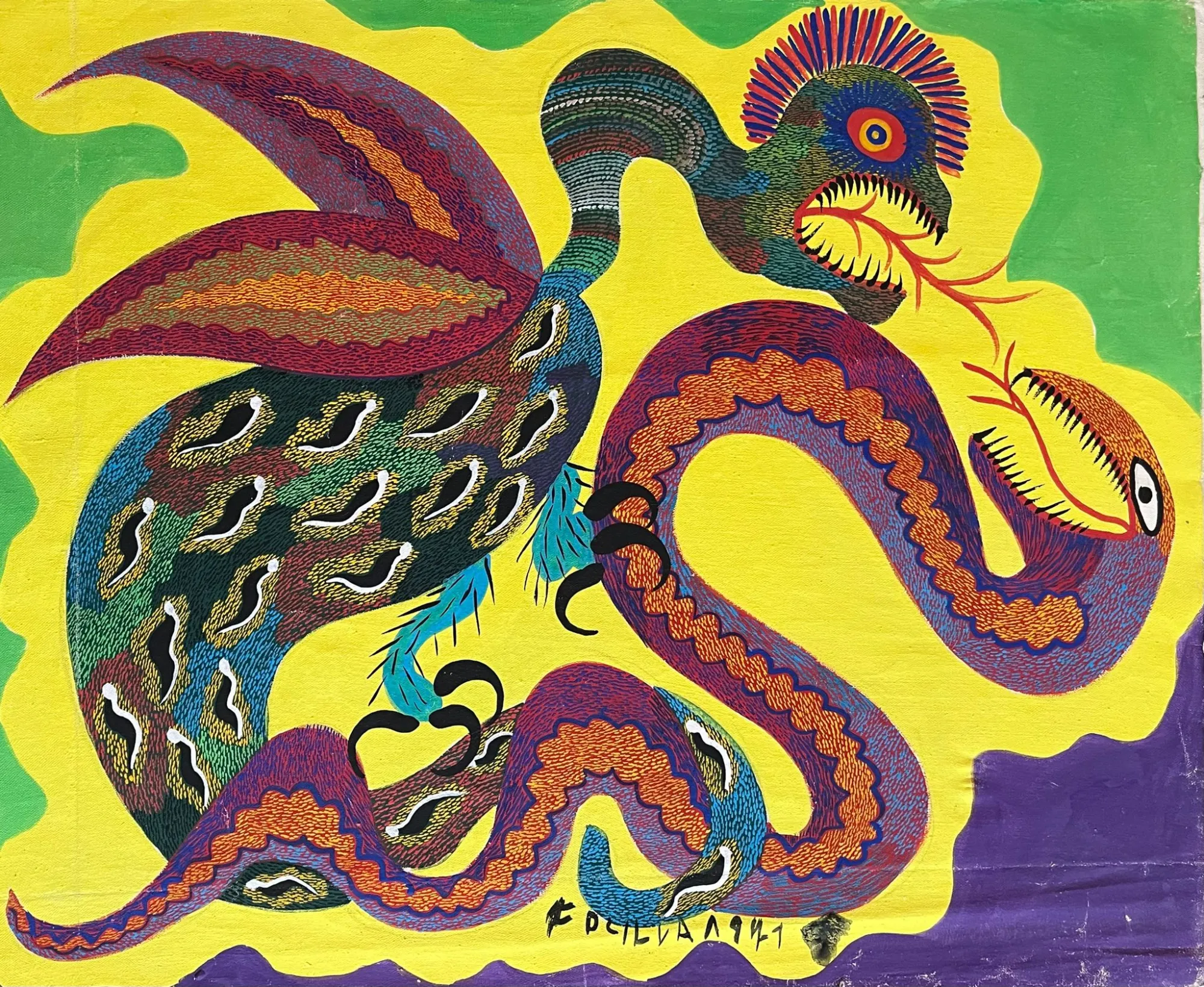
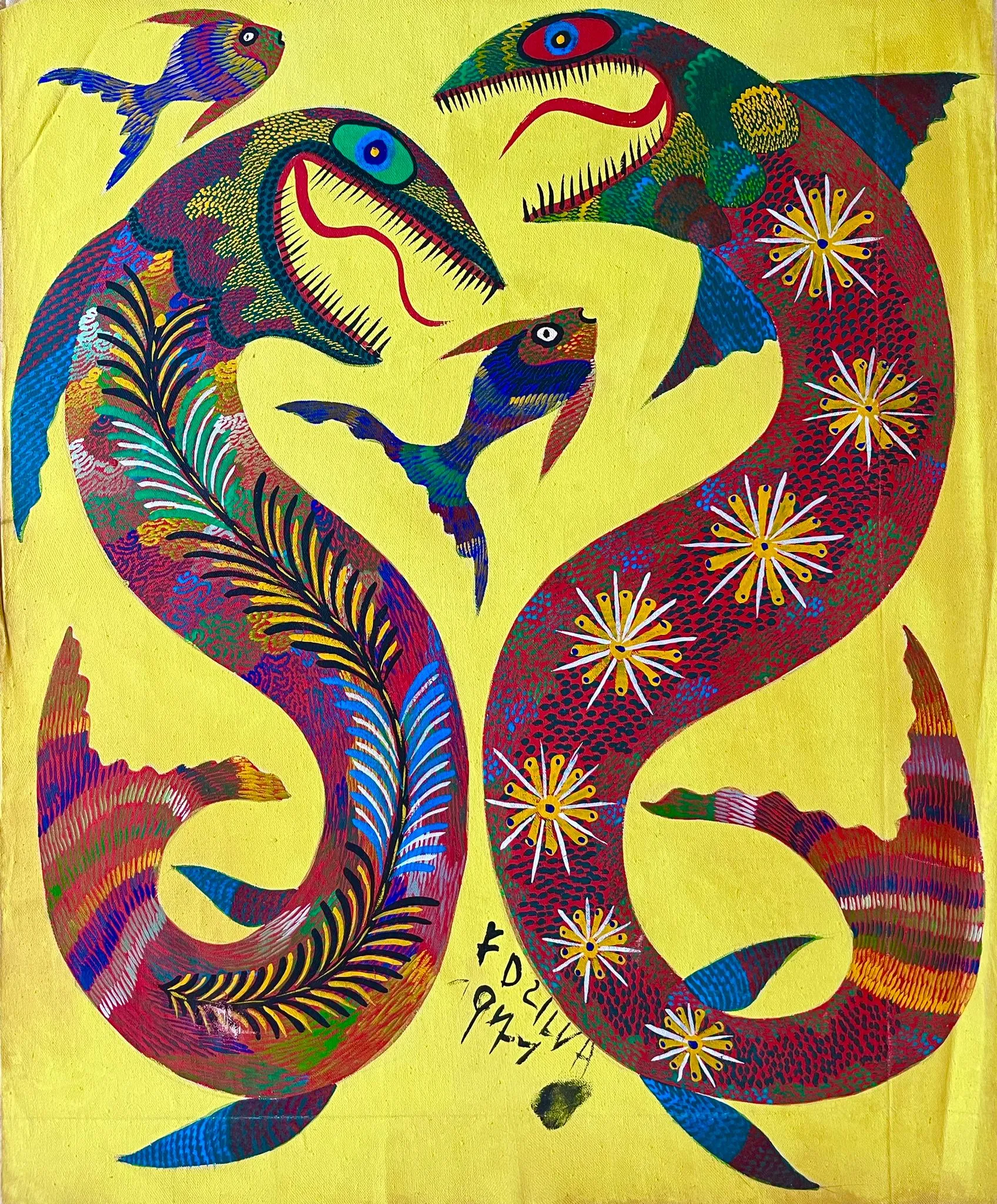
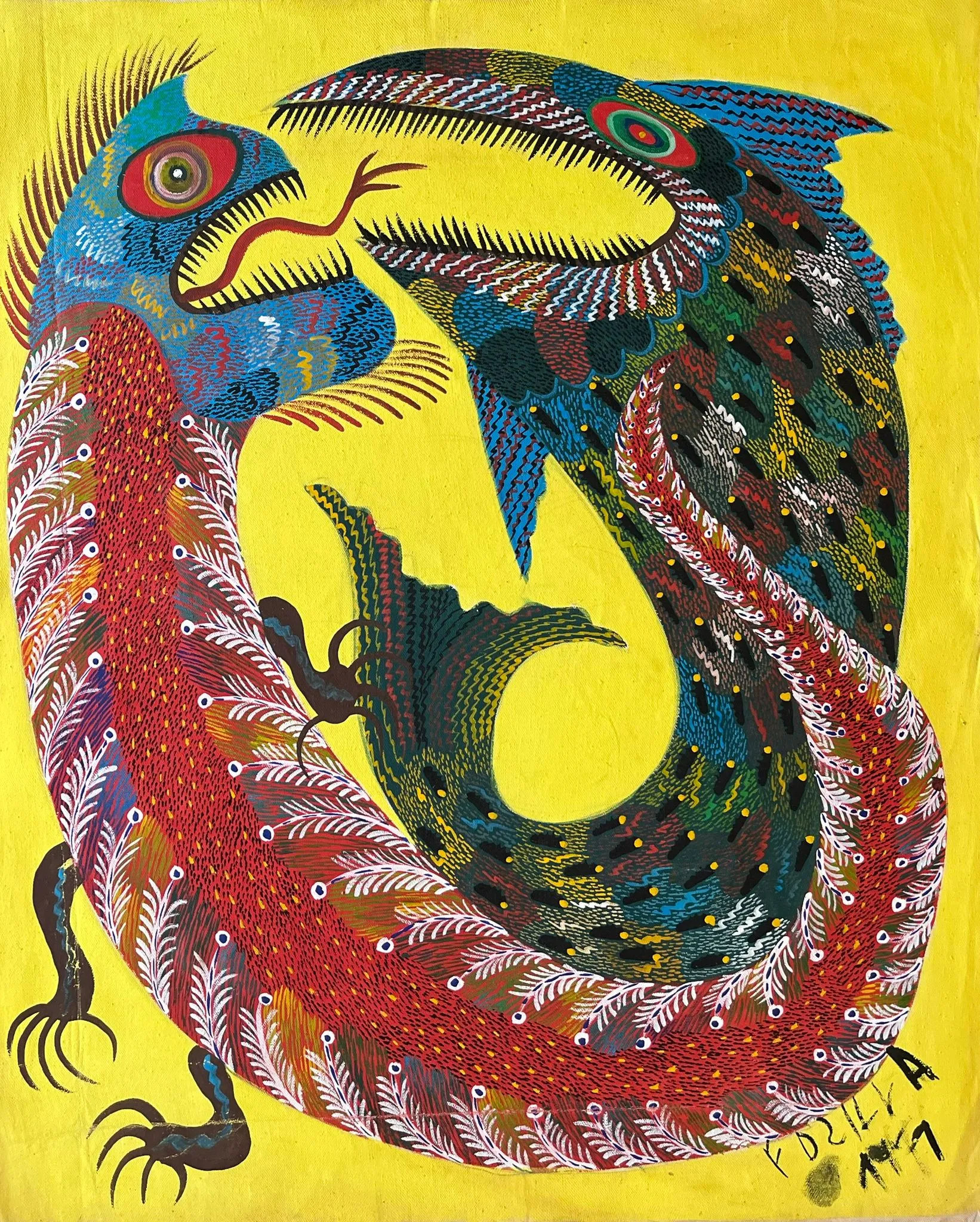
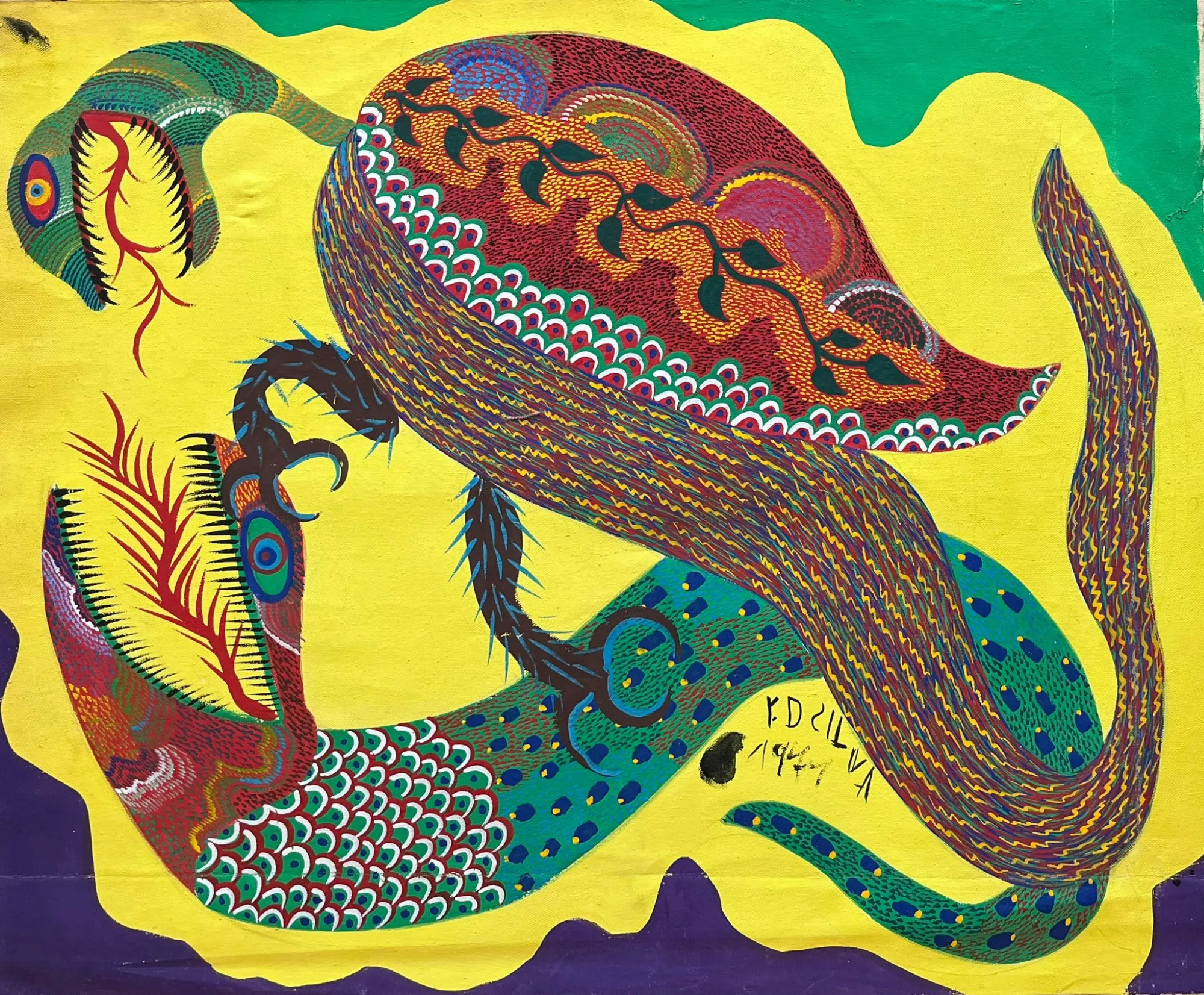
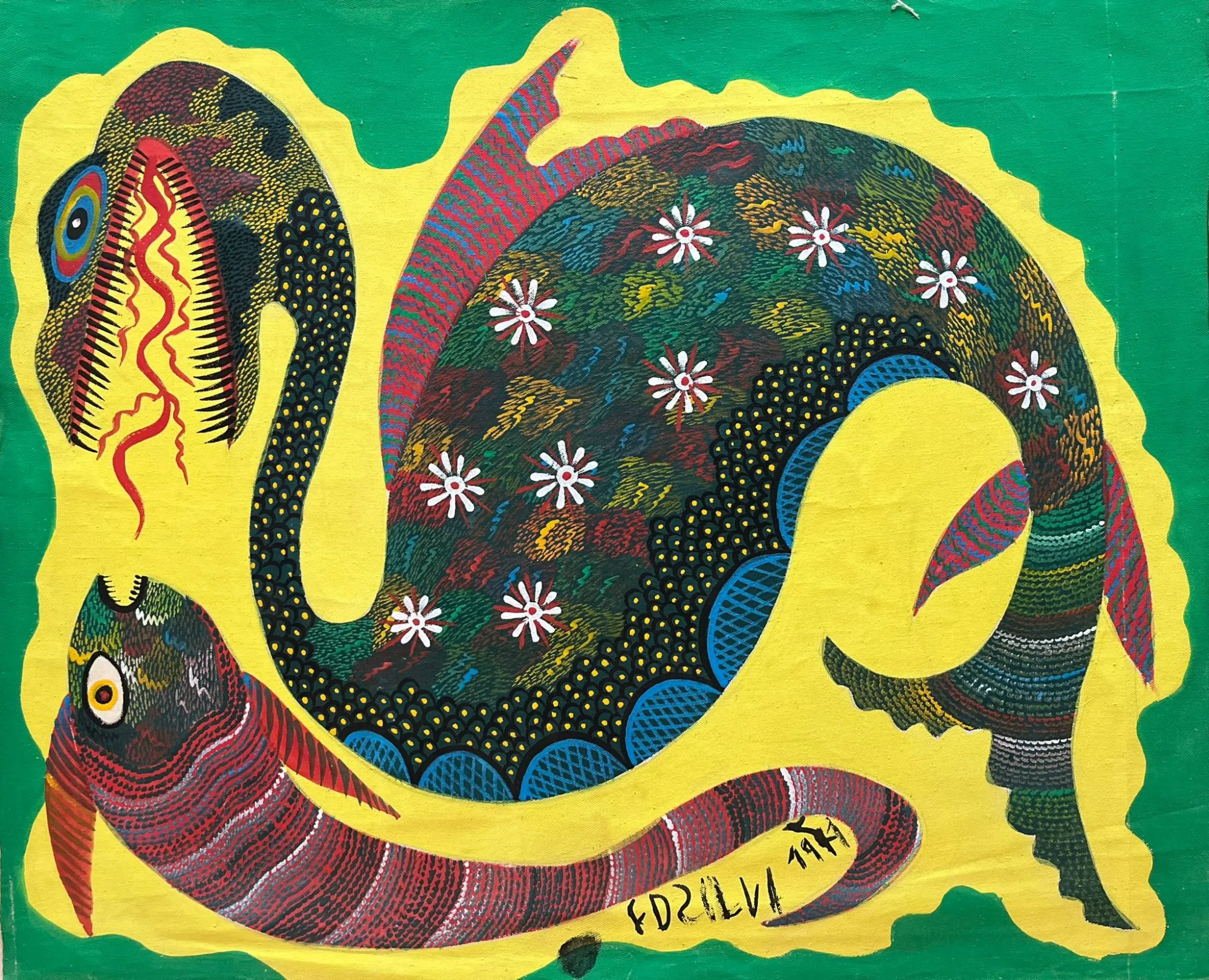
Chico da Silva’s visual universe is teeming with life. Fish fly and devour birds, while dragons battle serpents amid patterned leaves that shelter restless monsters. These works seem to resonate with the sounds of the forest and the cries of animals. Their movement holds the viewer’s gaze, while their wild narratives of conflict exert a hypnotic pull. His creatures are always poised to launch an attack or roar in triumph, evoking mythologies and expressing playfulness, hunger and desire.
The artist, who was of Indigenous and Peruvian descent, began by working with rudimentary materials, drawing on the walls of houses with charcoal and simple paints. His fantastical animal compositions, rich in flora and fauna and shaped by an imagination at once childlike and naïve, drew the attention of passers-by and caught the eye of the French art dealer Jean-Pierre Chablotz. In 1940, the concept of “contemporary primitive art” was still new and little understood, sparking a wave of fascination and enthusiasm that prompted Chablotz to promote Chico da Silva’s participation in fine arts salons in Brazil, several editions of the São Paulo Biennial and exhibitions across Europe, including the 1966 Venice Biennale, where he received an honourable mention.
The artist described his work as “Painting, sculpture, imagination: Interbacia fachada da ira do pintor”, articulating his artistic intentions and a considered definition of his practice that resisted the label of “primitive Indian” imposed upon him. Silva worked across a range of formats and developed both commercial and artistic strategies, producing everything from large-scale works for the Art Museum of the Federal University of Ceará to gouaches on paper or canvas destined for Europe.
Signed F. D. Silva, his “creatures” travelled the world through regular exhibitions at prestigious galleries in Brazil’s capital and the capitals of Europe, with strong support from the art dealers J. P. Chablotz and Henrique Bluhm. Chico da Silva’s first solo exhibition took place in 1961 at the Sede dos Associados in Fortaleza, featuring ten large-scale works. In response to high demand, the Escola de Pirambu was established in the mid-1960s as a studio where the artist welcomed apprentices and involved them in the mass production of his paintings, both for sale to institutions and for distribution to a wider public. Chico da Silva’s work has been described as “the paintings that almost all our parents and grandparents had on the walls of their homes, brought back as souvenirs from a trip to the exotic, sun-drenched Brazilian Northeast of the 1970s.” Unfortunately, the involvement of multiple hands soon drew his work into a bitter controversy over authenticity. This dispute led to the artist’s social decline and severely affected his health.
His career was not always marked by harmony and stability. The man who had been his foremost champion and ally soon began to undermine the value of his work and question its originality, going so far as to call it “illiterate and intuitive”. He insisted that these paintings owed their appeal to their exotic, simplistic character and that, when produced in large quantities, they amounted to mere copies and repetitions of a decorative formula.
Today, Chico da Silva is celebrated for the boldness and breadth of an imagination that never ran short of stories to tell, even when resources were scarce. The vitality of his colours and the ancestral quality of his drawing give his work a timeless character. His work was revisited in 2023 at the Pinacoteca do Ceará, with an exhibition of the most important paintings from the Pirambu studio. That same year, São Paulo hosted the largest retrospective of his work, bringing together 148 pieces. Reflecting his international reach, the artist’s work was also featured in an exhibition in New York in 2024, and several of his works will be presented at Galeria São Mamede in 2025.
Carolina Serranito
Articles
05 October 2026
Vieira da Silva: The Different Periods of Her Work
From her training in Paris to her final paintings, a journey through the discoveries and changes that shaped Vieira da Silva’s work.
07 October 2026
Alberto Reguera brings the four Seasons to the National Gallery of Canada
A live painting performance with audience participation.