Almada Negreiros
Scroll down
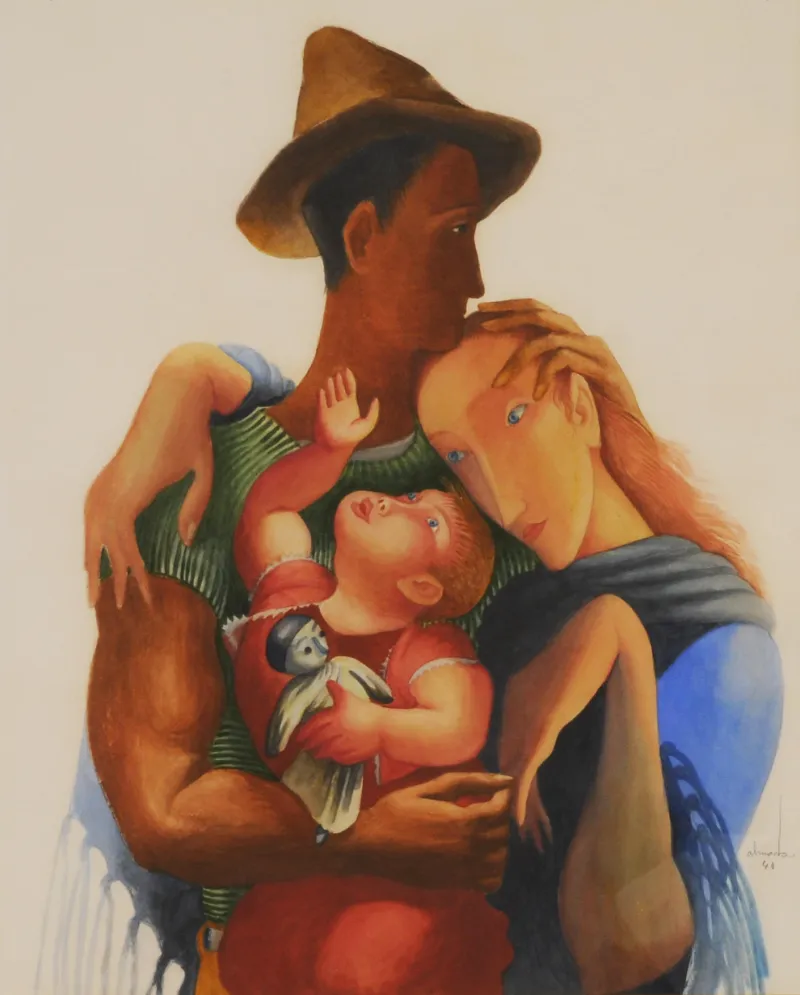
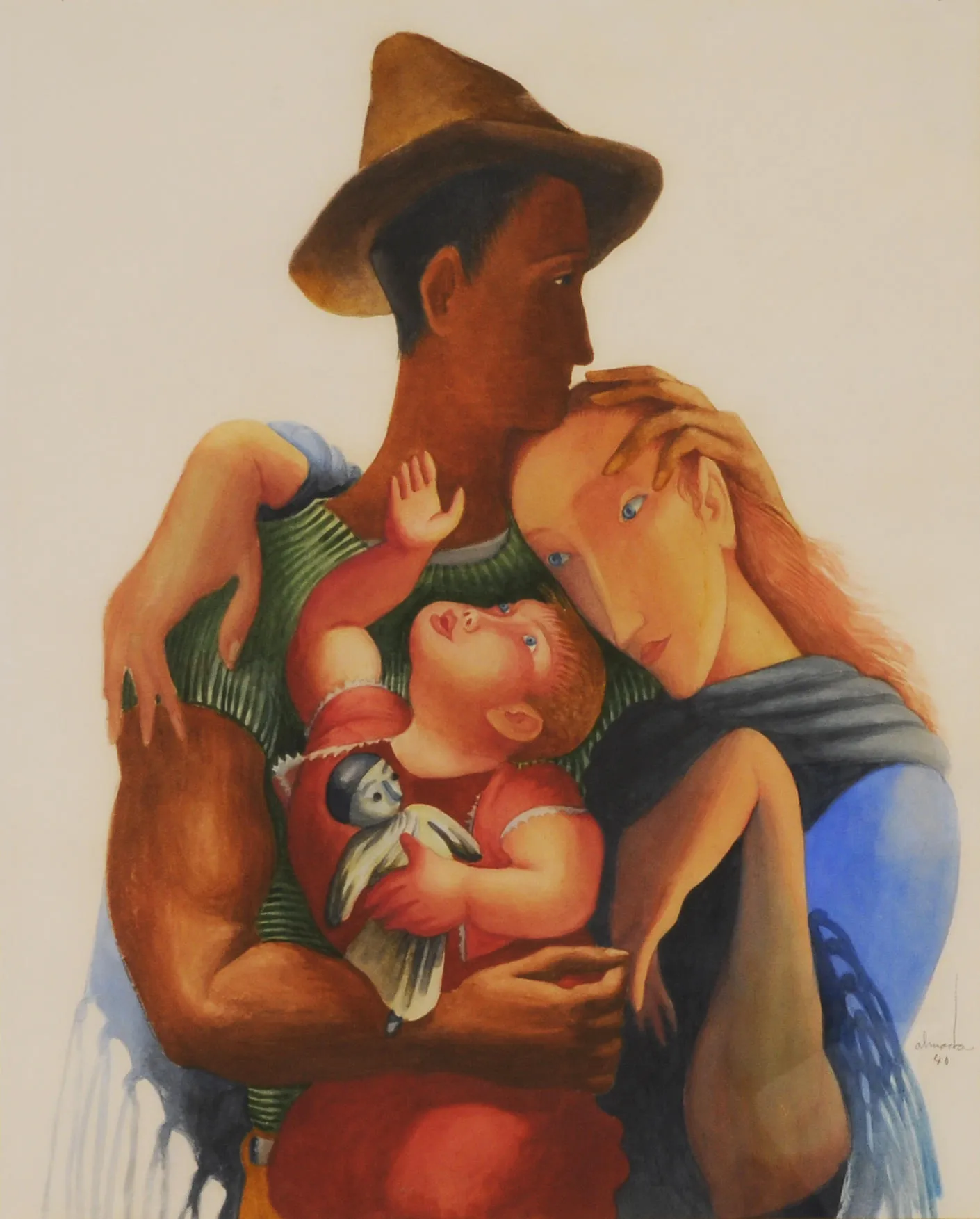
José de Almada Negreiros was born in Cidade da Trindade, São Tomé and Príncipe, in 1893, and died in Lisbon in 1970. A draughtsman, painter, writer, poet, essayist, caricaturist, illustrator, dancer and stage and costume designer, he was one of the central figures of Portuguese modernism, first as an artist of rupture and later as one with a classicist calling.
He made his debut as a humorous draughtsman in 1911 and took part in the 1st and 2nd Portuguese Humorists’ Salons in 1912 and 1913. In 1913 he also held his first solo exhibition, at the Escola Internacional de Lisboa, and painted his first oils. In 1915 he contributed to the first issue of the magazine "Orpheu" and, in the years that followed, took up the banner of Futurism together with Santa Rita Pintor, with texts such as the "Manifesto Anti-Dantas" and the "Ultimatum Futurista às Gerações Portuguesas do Século XX" (1917). The Ballets Russes, who performed in Lisbon in 1917 and 1918, made a deep impression on him.
He lived in Paris between 1919 and 1920 and later in Madrid, from 1927 to 1932, where he took part in Spanish artistic and literary life and formed ties with the architects of the Generation of ’25. In Lisbon he took part in the Exhibition of the Five Independents in 1923 and in 1925 painted "Auto-Retrato num Grupo" and "Banhistas" for the café A Brasileira in Chiado. In 1934 he married the painter Sarah Affonso. His novel "Nome de Guerra" was published in 1938.
After returning to Lisbon he devoted himself mainly to decorative work, with numerous designs for stained glass and mural painting. Of particular note are the frescoes for the Alcântara Maritime Stations (1943-1945) and the Rocha do Conde de Óbidos Maritime Station (1946-1949), and the portraits of Fernando Pessoa for the Irmãos Unidos restaurant (1954) and for the Calouste Gulbenkian Foundation (1964). In the essays "Ver" (1943) and "Mito - Alegoria - Símbolo" (1948) he theorised the search for the canon as the foundation of creation. The stone-incised panel "Começar" (1968-1969), at the entrance to the Calouste Gulbenkian Foundation headquarters, brings his career to a close.
His distinctions include the Columbano Prize in 1942, the Domingos Sequeira Prize in 1946, the Calouste Gulbenkian Foundation Prize in 1957, the year in which he showed a series of four abstract-geometric oils at the Foundation’s 1st Exhibition of Fine Arts, and the Diário de Notícias Prize in 1966.
His work is held in the collections of the Calouste Gulbenkian Foundation’s Modern Art Centre, the Museu Nacional de Arte Contemporânea do Chiado and MACAM.