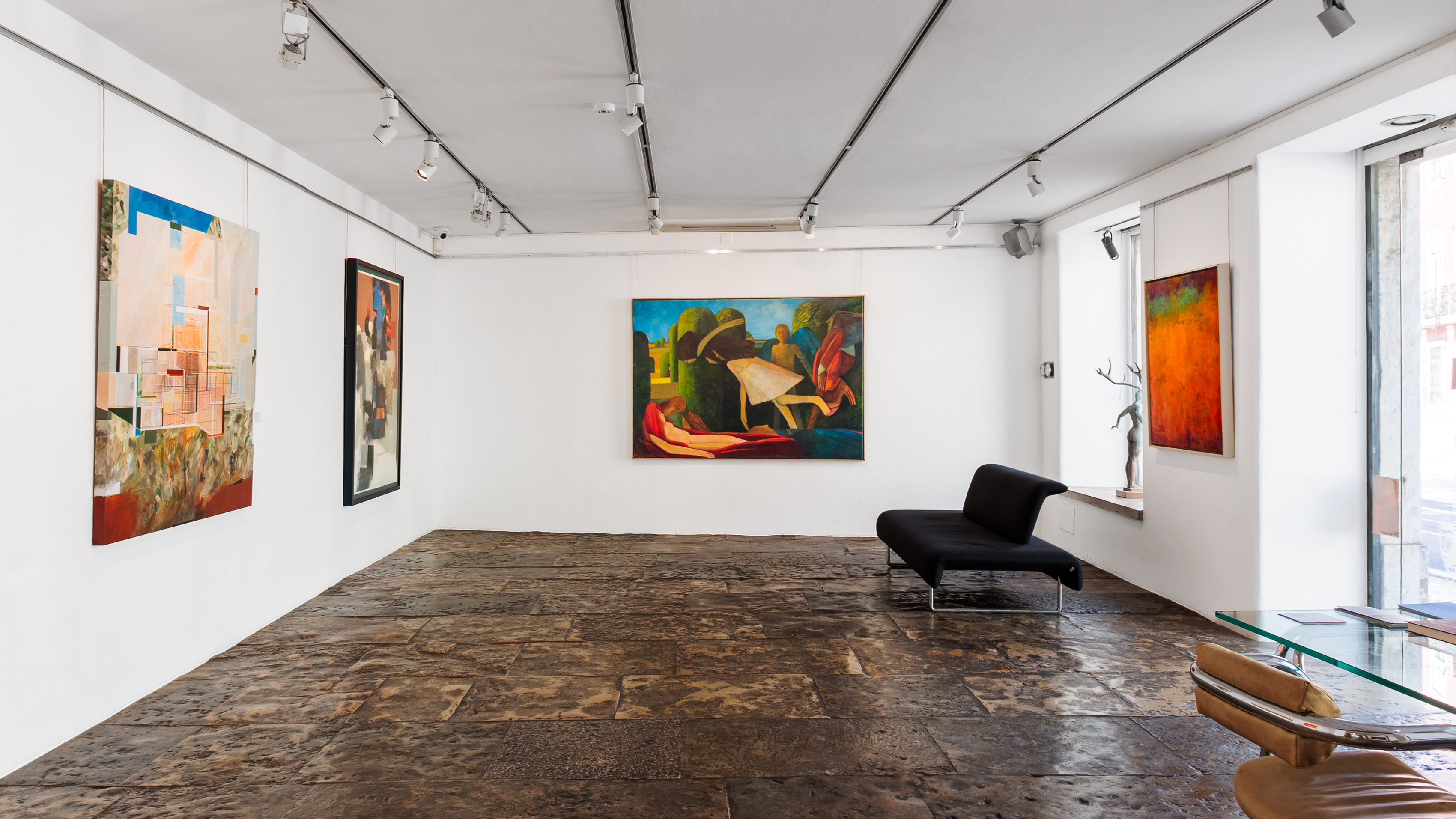
António Palolo
(1946 - 2000)
António Palolo
Scroll down
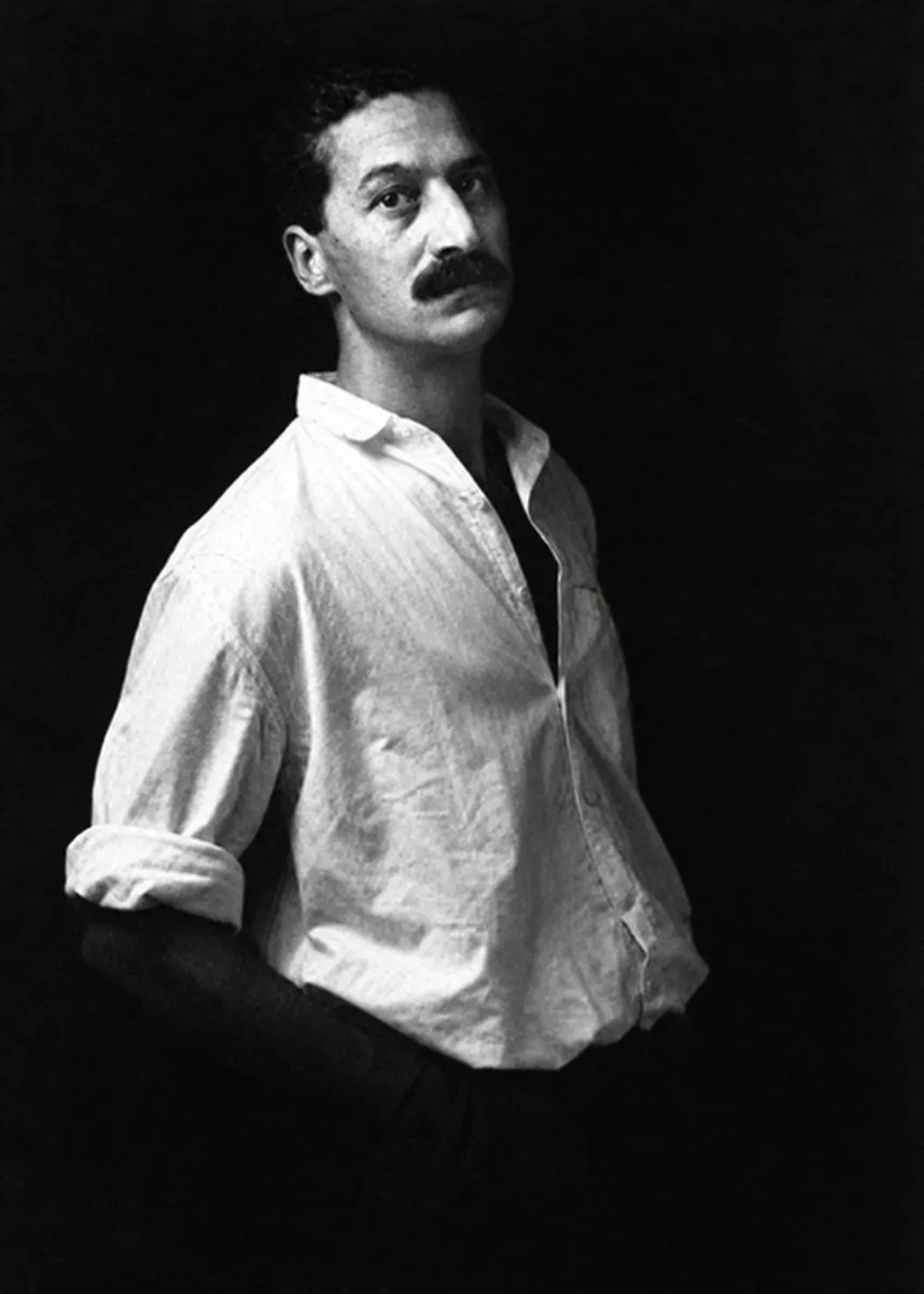
António Palolo was born in Évora in 1946 and died in Lisbon in 2000. Self-taught, he began his artistic career in contact with Joaquim Bravo, Álvaro Lapa and António Charrua. He held his first solo exhibition in 1964, at Galeria 111 in Lisbon, with which he maintained a regular collaboration until the early 1980s.
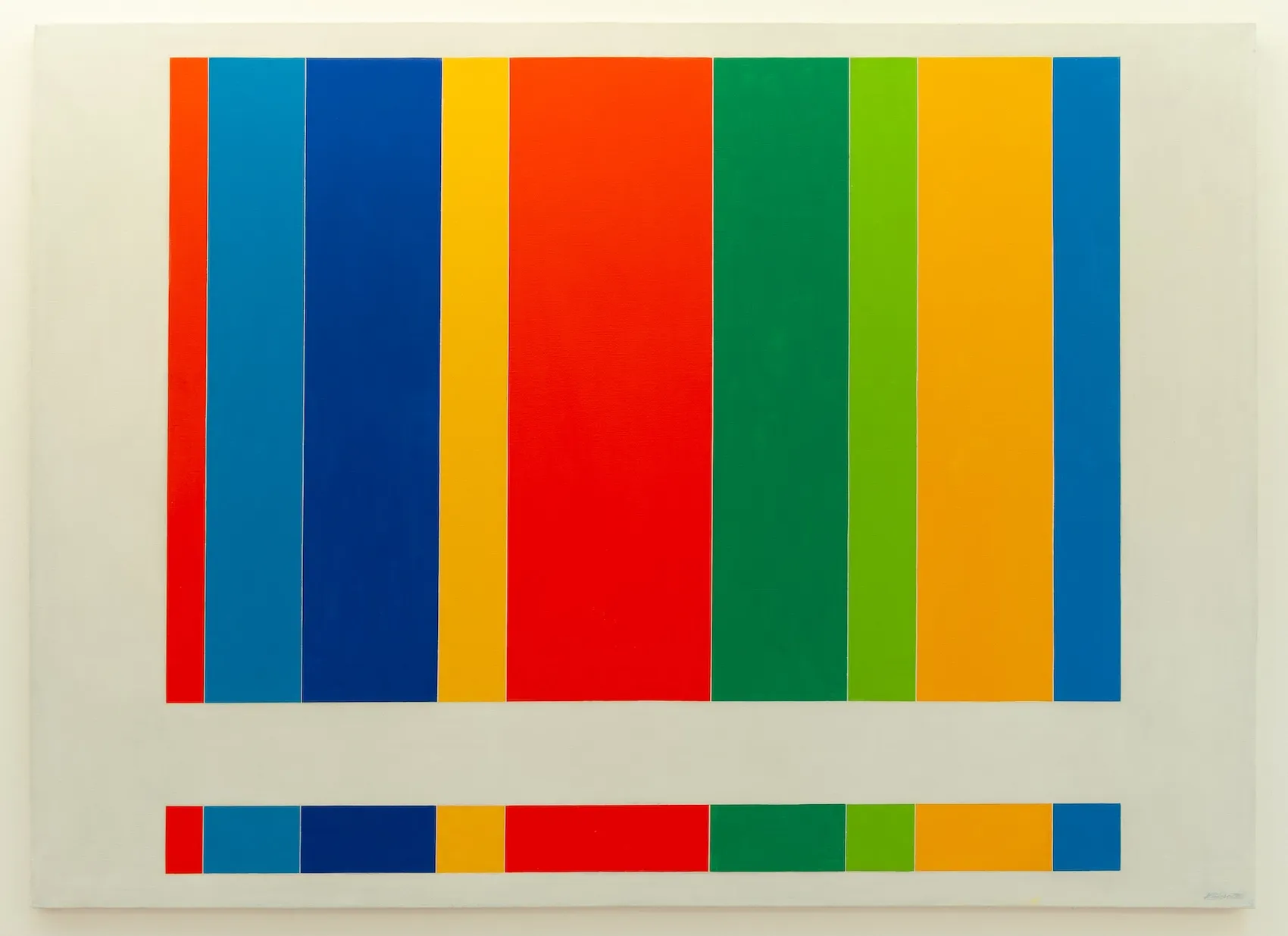
In the 1960s his work moved closer to Pop Art and Neo-Dadaism, combining painting, drawing and collage in compositions of intense colours and clearly defined planes. In the following decade this language evolved towards geometric abstraction, with references to Op Art, Minimalism and Hard-edge painting. Bands of colour, chromatic contrasts and sharp angles came to organise the compositions, at times made on canvases cut into non-rectangular formats.
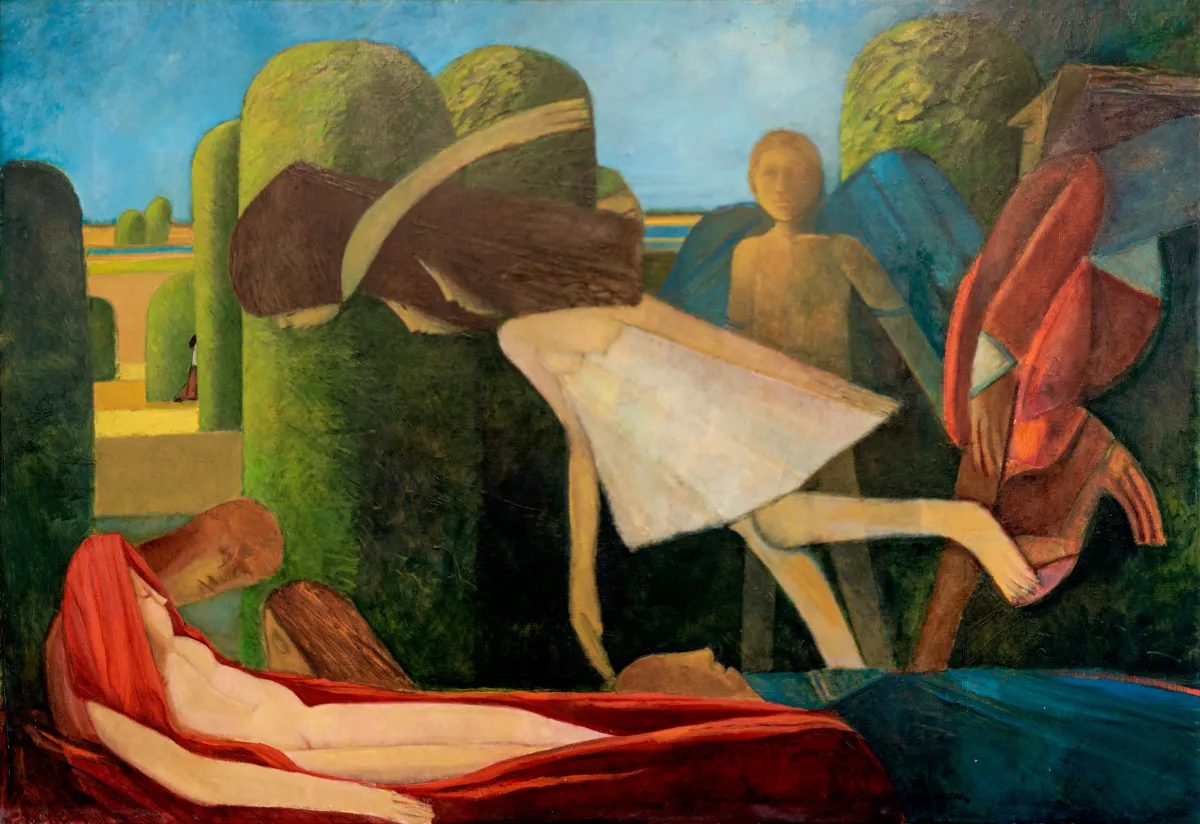
The return to figuration in the 1980s brought to his painting bodies and settings of a dreamlike character, accompanied by a greater expressiveness of gesture and material. At the turn of the 1990s he took up geometry again, exploring transparencies, overlappings and variations of texture. Colour remained central to this investigation, lending movement and depth to the apparently regular structures of his paintings.
In parallel, he pursued experiments in film, video and installation. From the late 1960s onwards he made works with moving images and, between 1979 and 1981, he presented installations at Galeria Quadrum. During the 1980s he also collaborated with the group Telectu, creating installations for concerts and designing record sleeves.
He took part in exhibitions such as "Alternativa Zero", in 1977, and "Depois do Modernismo", in 1983. In 1995 the Centro de Arte Moderna of the Fundação Calouste Gulbenkian opened the retrospective "António Palolo, 1963-1995", which brought together 120 works and remained on view until January 1996. In connection with this presentation, Jorge Silva Melo made the documentary "António Palolo: Ver o Pensamento a Correr", devoted to the artist and his work.
His work is part of various public and private collections, among them those of the Centro de Arte Moderna of the Fundação Calouste Gulbenkian, the Fundação de Serralves, the Caixa Geral de Depósitos and MACAM, Museu de Arte Contemporânea Armando Martins.
Artworks
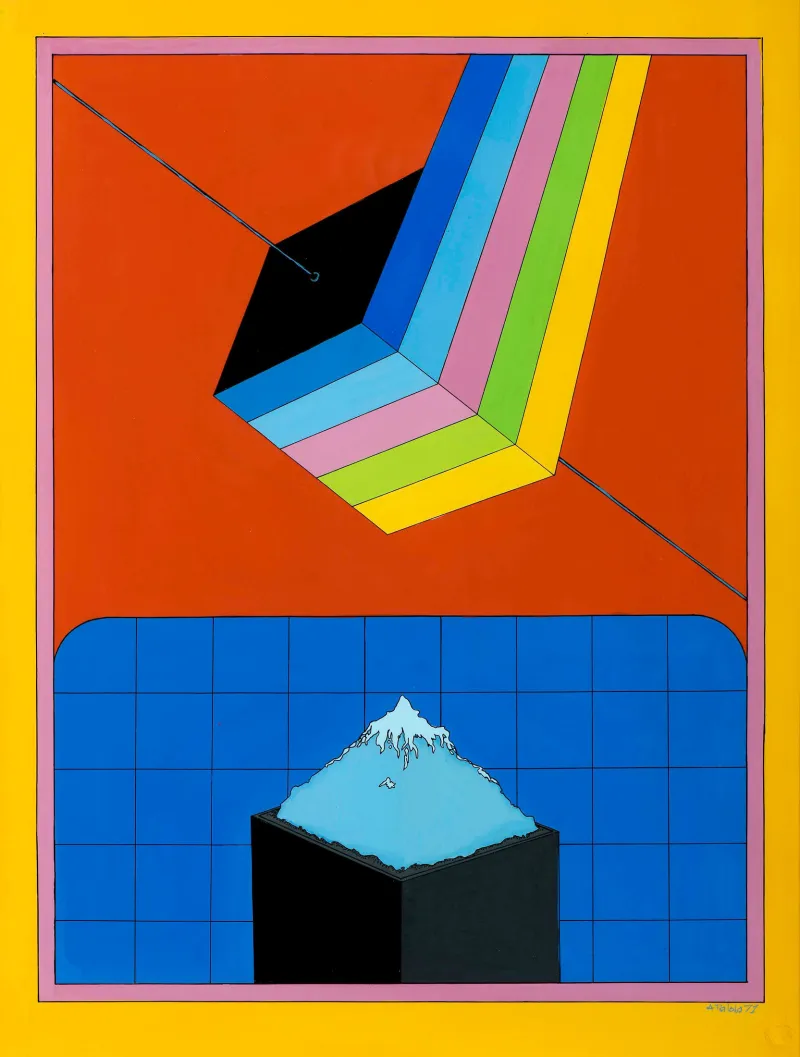
António Palolo
Untitled, 1971
64 x 49 cm | Available
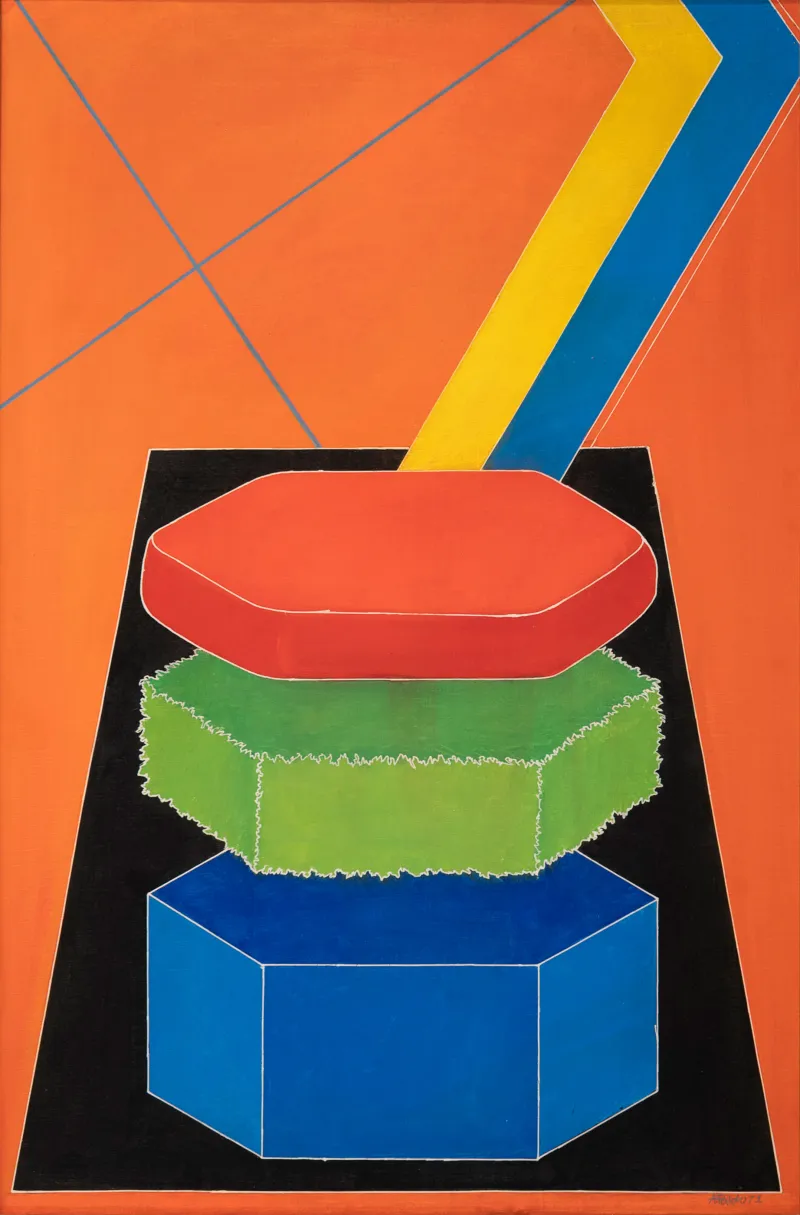
António Palolo
Untitled, 1971
87 x 59 cm | Available
Exhibitions
No results found.