Espiga Pinto
(1940 - 2014)
Espiga Pinto
Scroll down
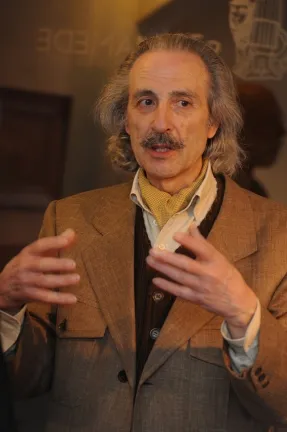
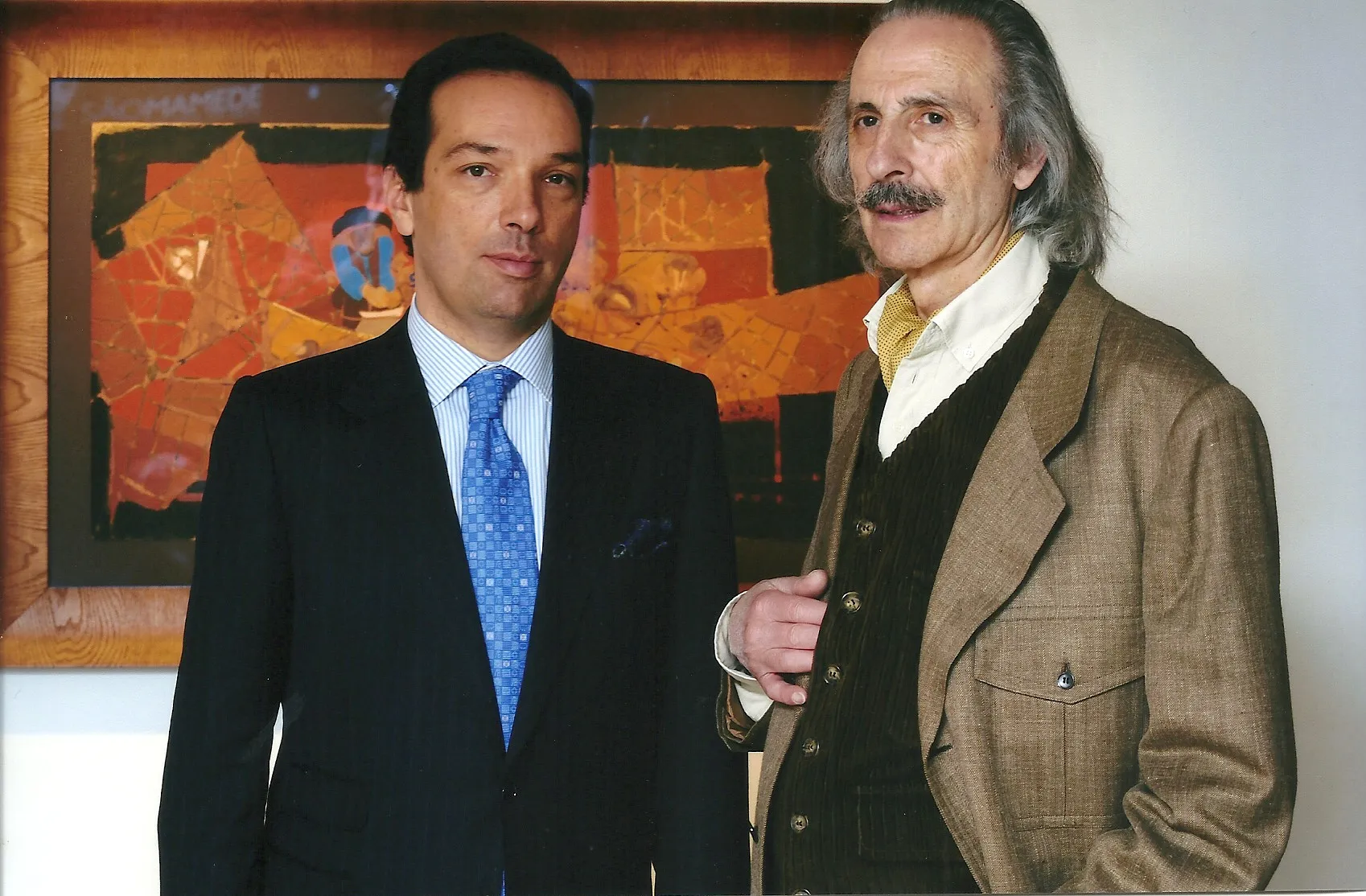
José Manuel Espiga Pinto was born in Vila Viçosa in 1940 and died in Porto in 2014. He attended the Sculpture course at the Escola Superior de Belas-Artes de Lisboa between 1957 and 1960. His practice encompassed painting, drawing, sculpture, printmaking, stage design and medal art, as well as interventions in public space.
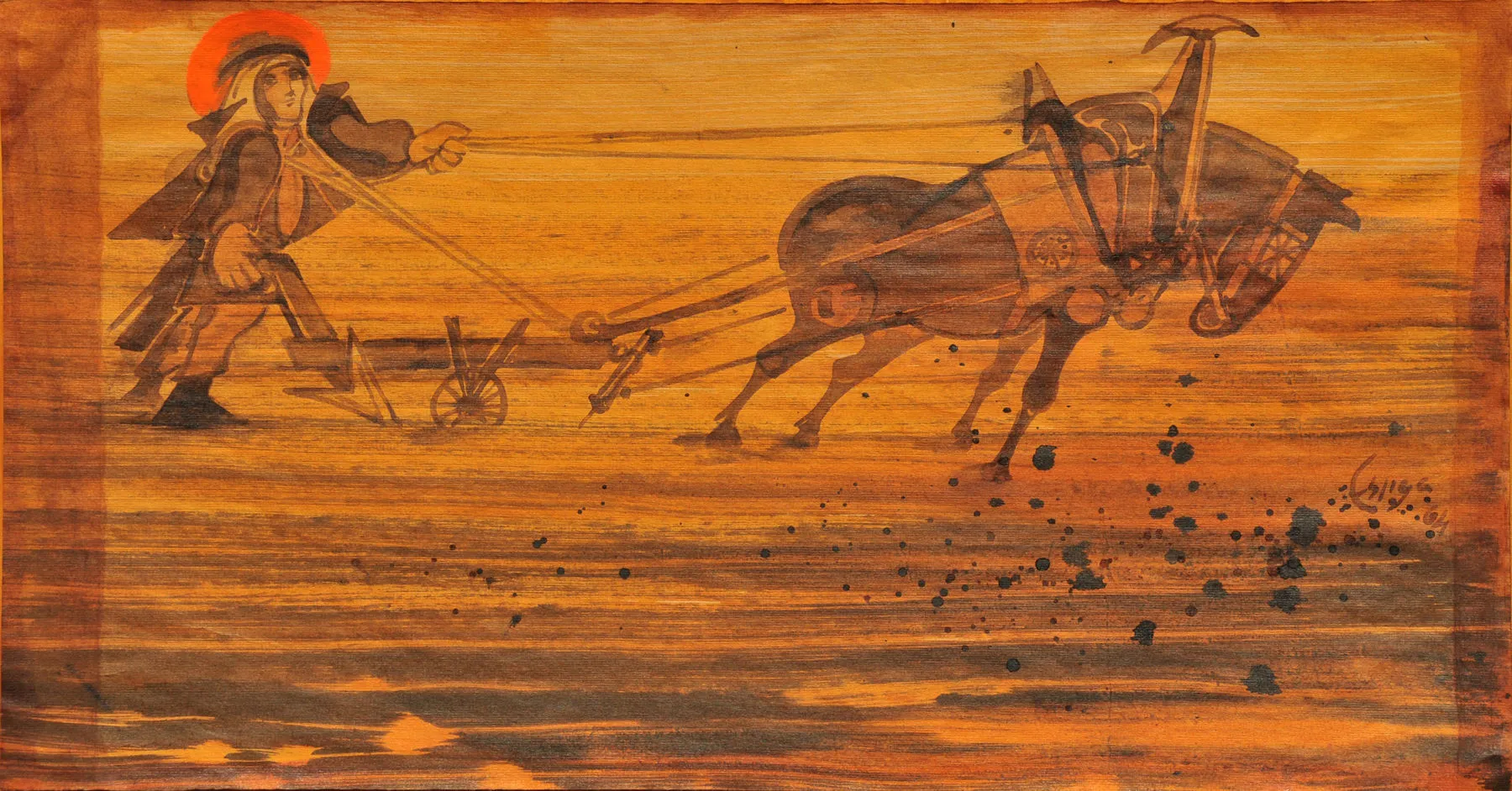
The Alentejo is a persistent reference in his work. Peasants, horses, farm work, festivals and popular rituals populate his early compositions, bringing them close to neo-realist themes, often treated with humour and irony. Figuration and abstract experimentation already coexisted in the 1960s. Geometry gradually gained greater importance, accompanying an investigation into space, symbols and the representation of the cosmos, while maintaining links to the imagery of his native region.
He began exhibiting in 1955 in Vila Viçosa and presented a solo exhibition at Galeria Pórtico in Lisbon in 1958. Throughout his career he showed his work regularly at venues such as the Divulgação, 111 and Alvarez galleries and the Sociedade Nacional de Belas-Artes. He took part in the "II Exposição de Artes Plásticas da Fundação Calouste Gulbenkian" in 1961, the 1st Luso-Spanish Biennial in 1968 and the 12th São Paulo Biennial in 1973. Between 1973 and 1974 a grant from the Fundação Calouste Gulbenkian enabled him to travel to several European cities.
Stage design played an important part in his activity. He worked with the Teatro Experimental de Cascais and with the Ballet Gulbenkian, for which he designed sets and costumes. His work for the ballet "Dulcineia" earned him a distinction at the São Paulo Biennial in 1973. His experiments in constructing stage space went hand in hand with the exploration of geometric forms and three-dimensional proposals in his visual work.
He also taught at the Escola Industrial e Comercial de Estremoz and later at IADE in Lisbon. In printmaking and screen printing he worked with various publishers, among them the Sociedade Cooperativa de Gravadores Portugueses, Cooperativa Árvore and the Centro Português de Serigrafia.
His distinctions include the Painting Prize of the Academia de Belas-Artes de Lisboa in 1987 and recognition of his numismatic work in the Coin of the Year competition in the United States in 2000.
His work is held in collections including those of the Centro de Arte Moderna of the Fundação Calouste Gulbenkian, the Museu Nacional de Arte Contemporânea, the Museu de Évora and MACAM. In 2020 the CAM received a donation of more than fifty works, including drawings, prints, sculptures and sketchbooks.
Artworks
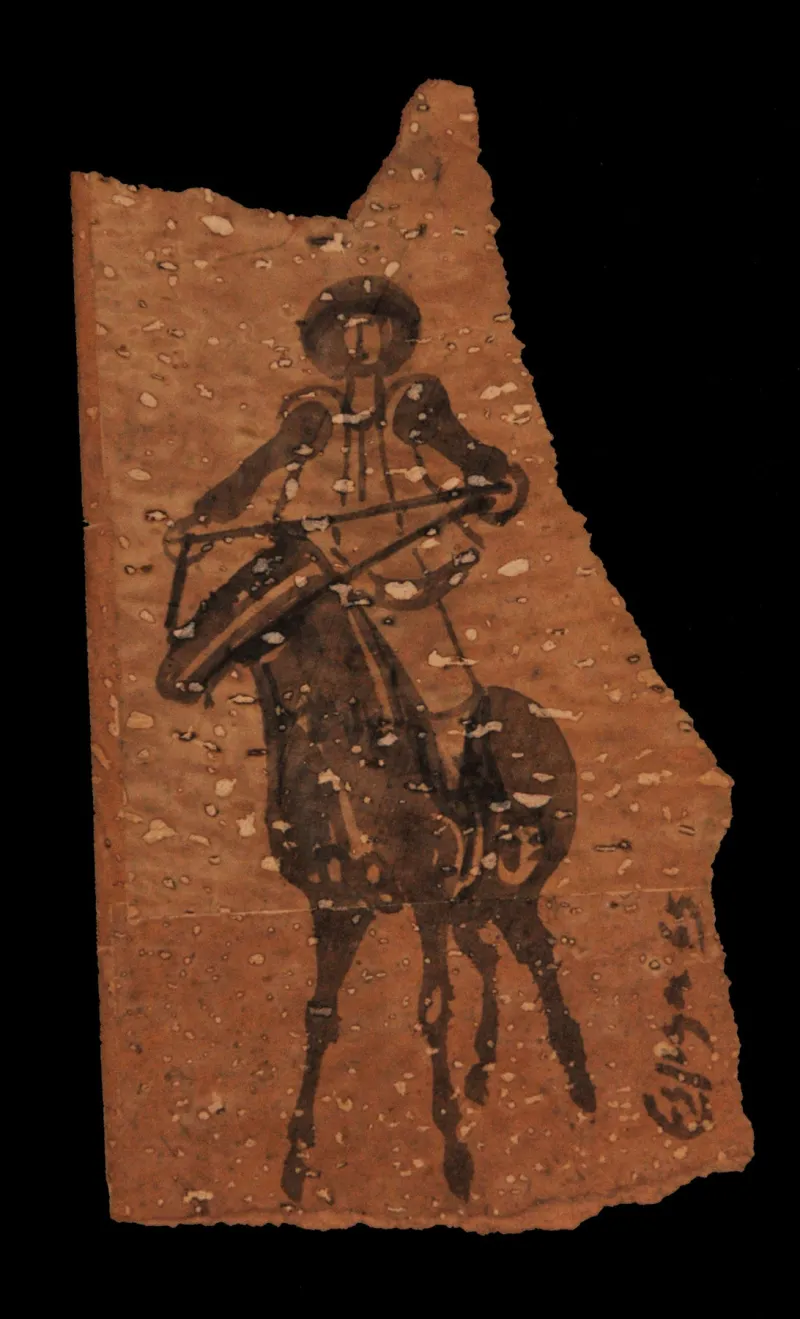
Espiga Pinto
Camponesa a cavalo, 1965
14 x 8 cm | Available
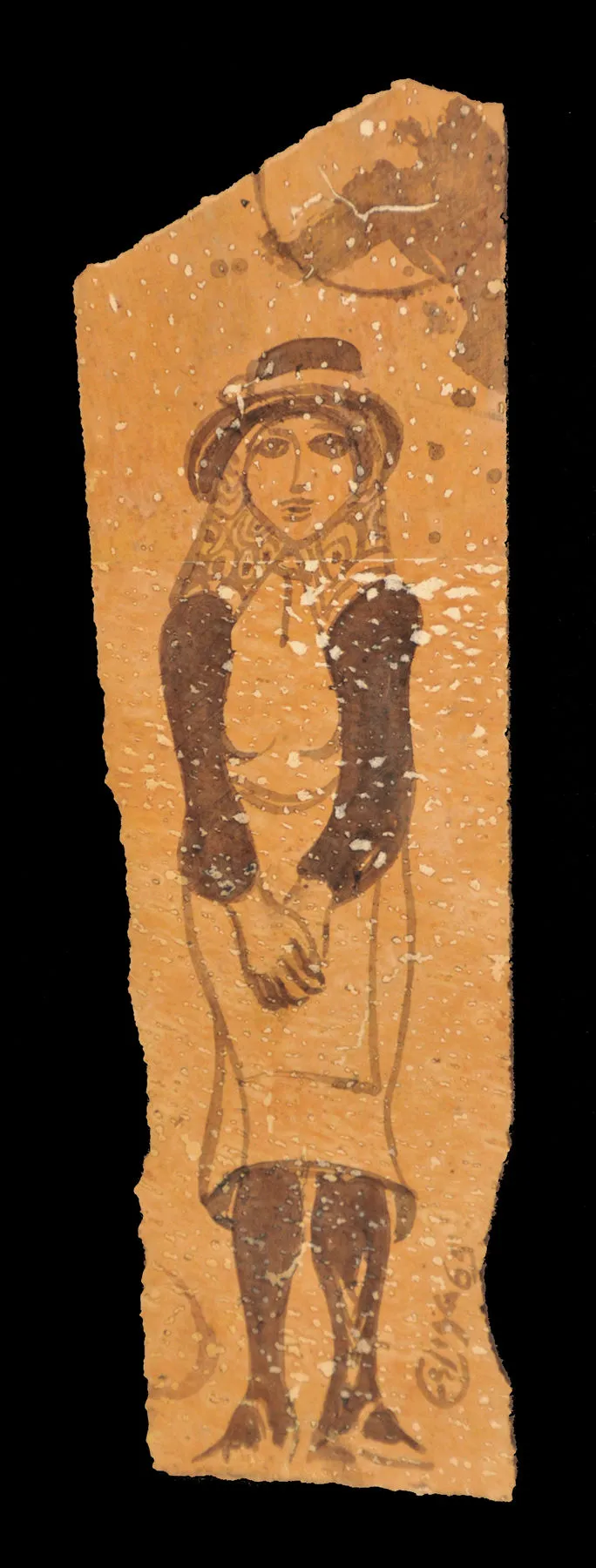
Espiga Pinto
Camponesa com pendão de Festa (88-20), 1965
21 x 7 cm | Available
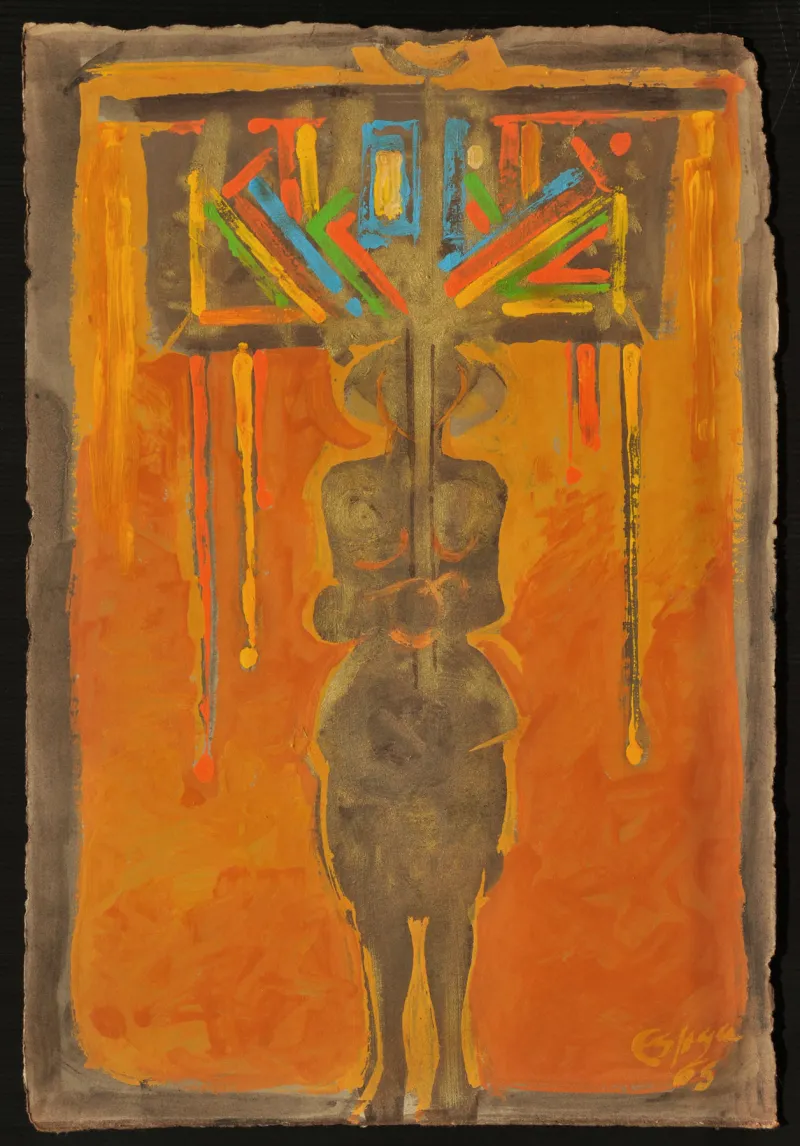
Espiga Pinto
Camponesa com pendão de Festa (88-08), 1965
49 x 33 cm | Available
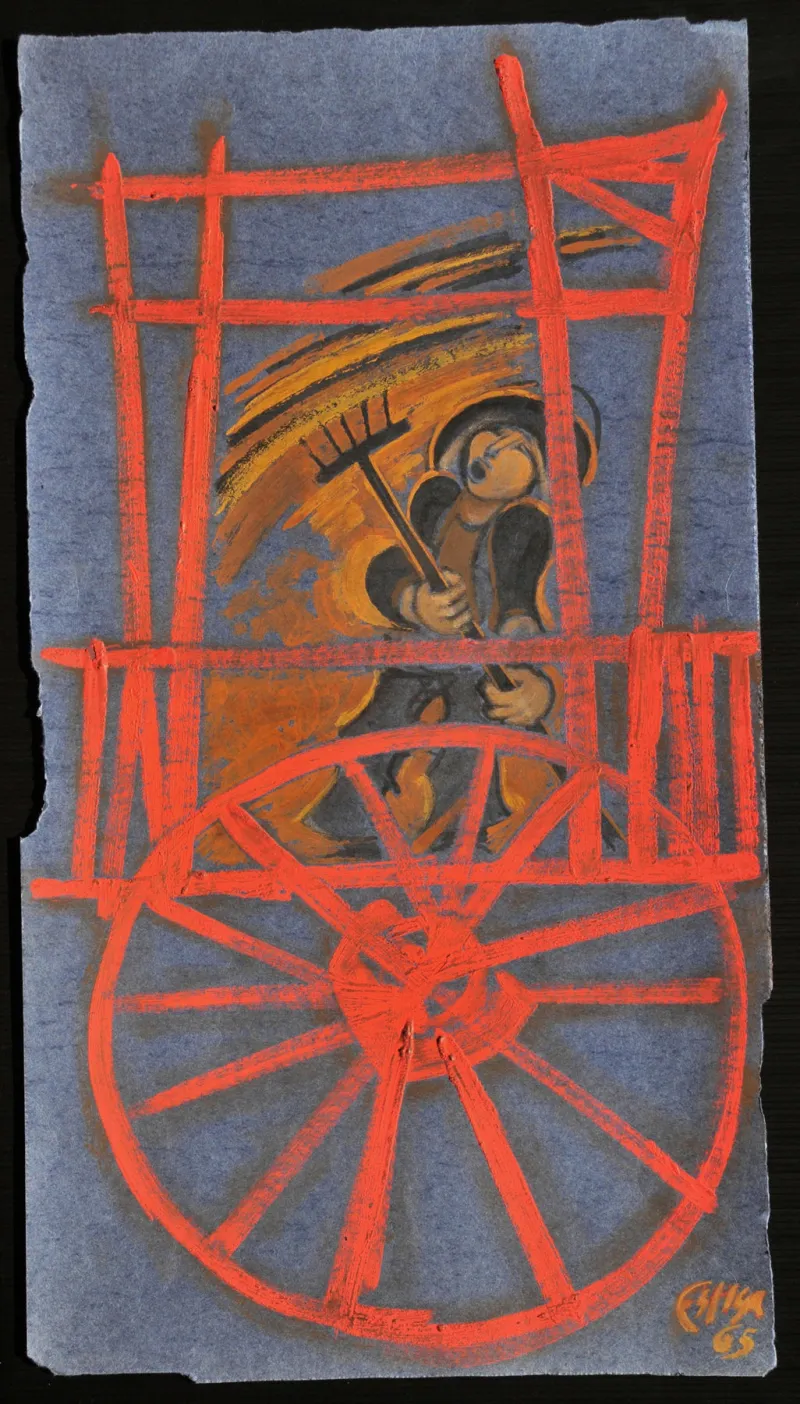
Espiga Pinto
Camponês no carro da palha, 1965
63 x 35 cm | Available
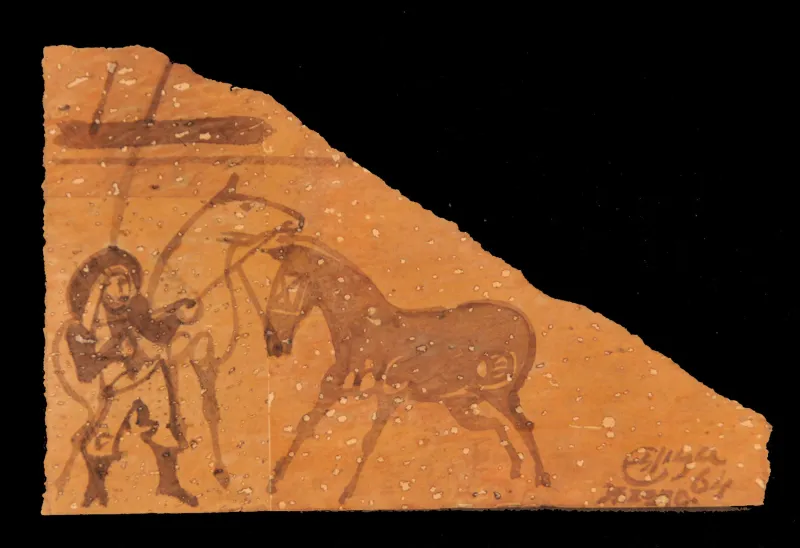
Espiga Pinto
Cavalariça, 1964
9 x 14 cm | Available
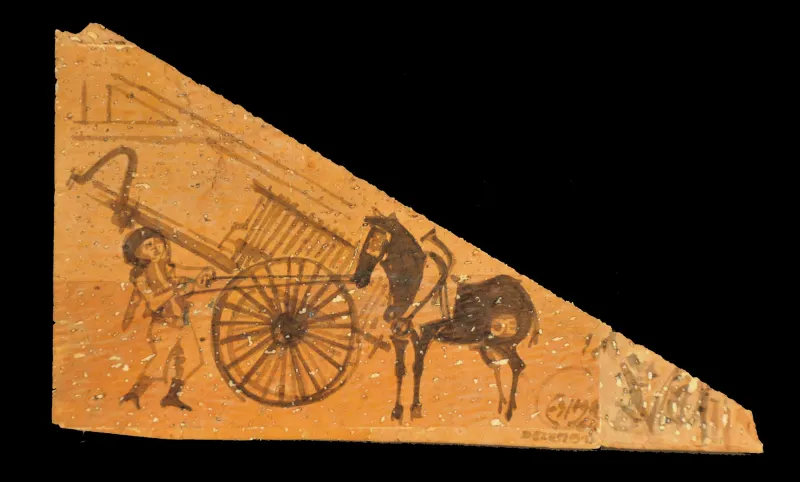
Espiga Pinto
Cocheira, 1964
12 x 21 cm | Available
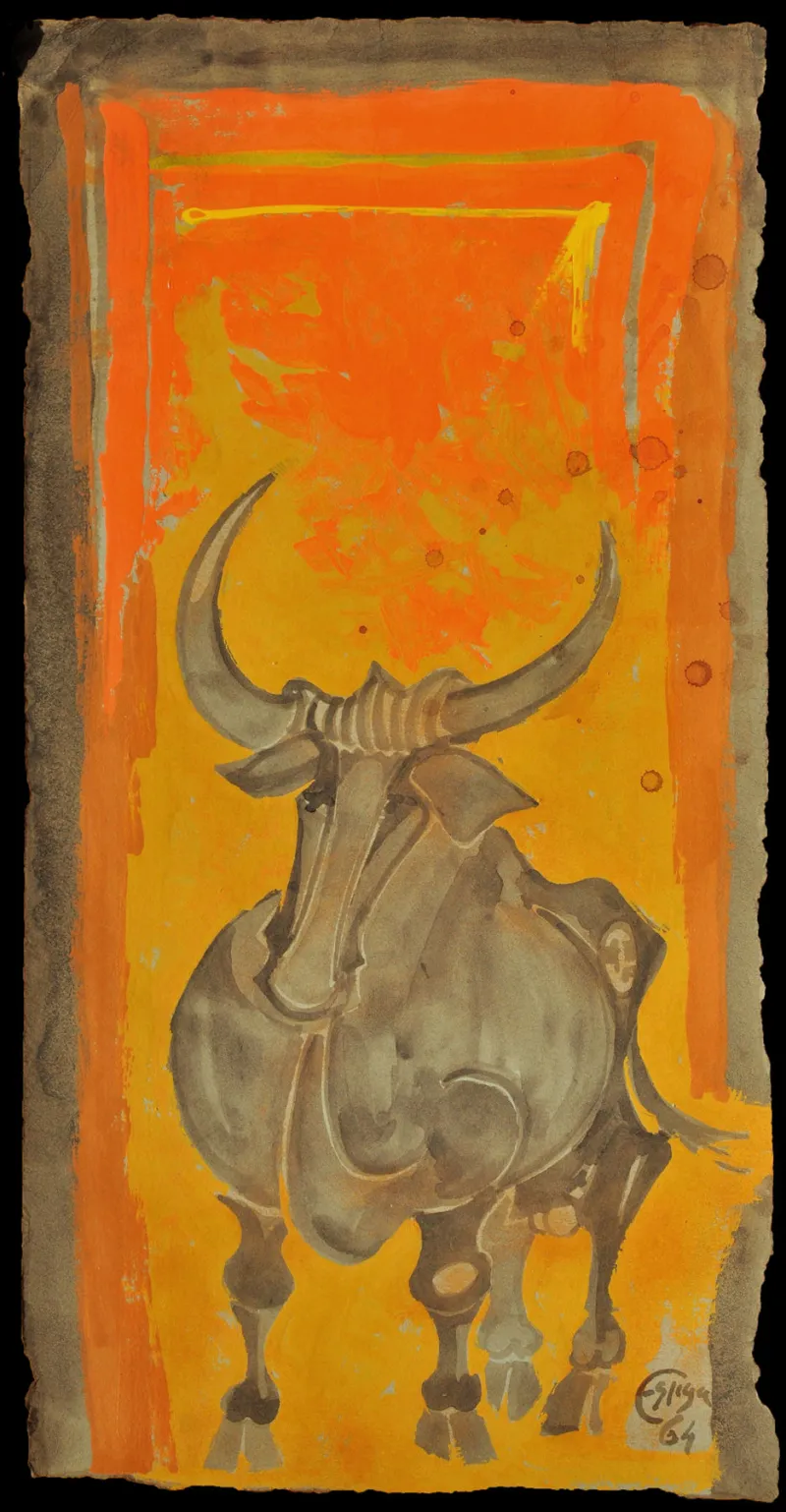
Espiga Pinto
Touro, 1964
47 x 24 cm | Available
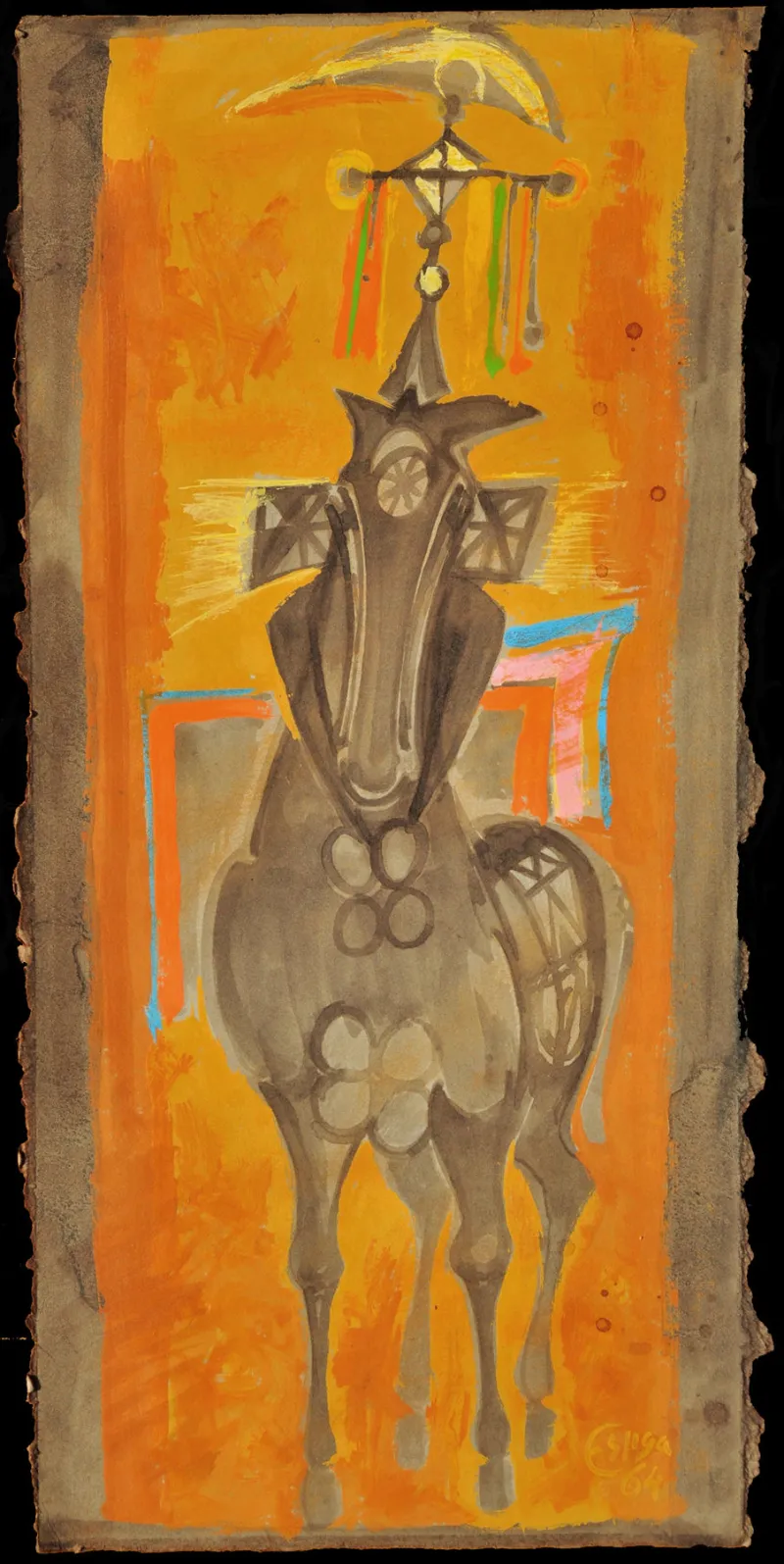
Espiga Pinto
Cavalo em Festa, 1964
23 x 49 cm | Available