Hein Semke
Scroll down
Hein Semke was born in Hamburg, Germany, in 1899, and died in Lisbon in 1995. Having lost his mother at the age of ten, he volunteered for the First World War in 1916 and fought in Ukraine, France and Flanders. After demobilisation he worked as a stonemason, docker, miner and newspaper seller, moved in anarchist circles and was imprisoned until 1928. The experience of war made him a pacifist. An exhibition of Russian icons led him to take up sculpture, which he studied in 1930 at the Hamburg School of Arts and Crafts under Johann Bossard and Max Wünsche, and in 1931-1932 at the Stuttgart Academy of Fine Arts under Ludwig Habich.
He settled in Portugal in 1932, in Linda-a-Pastora, and that same year showed work at the Sociedade Nacional de Belas-Artes. He knew Fernando Pessoa and was a friend of Almada Negreiros, Mário Eloy and Vieira da Silva. Critics saw in his sculpture a primitive, mystical character, with Romanesque and Gothic echoes and affinities with Barlach’s Expressionism. In 1935 he completed three sculptures for the Courtyard of Honour for the War Dead at the German Evangelical Church in Lisbon, which Nazi censorship condemned as "degenerate art" and which were partly destroyed.
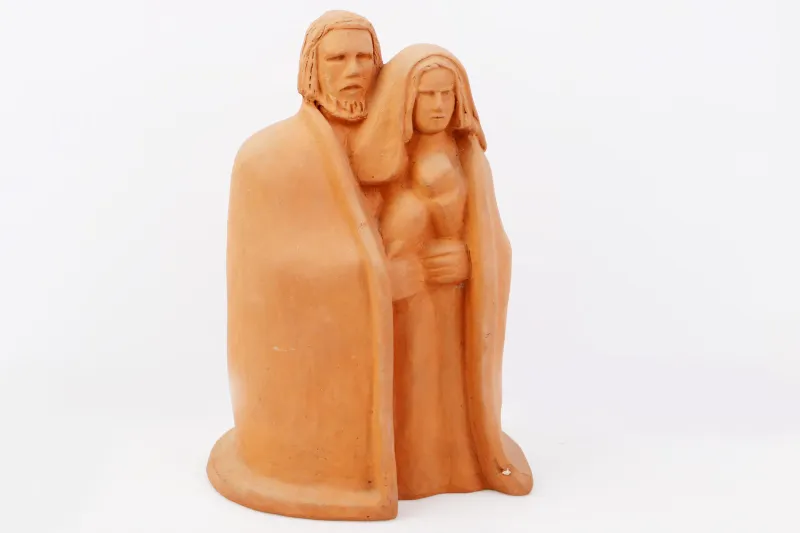
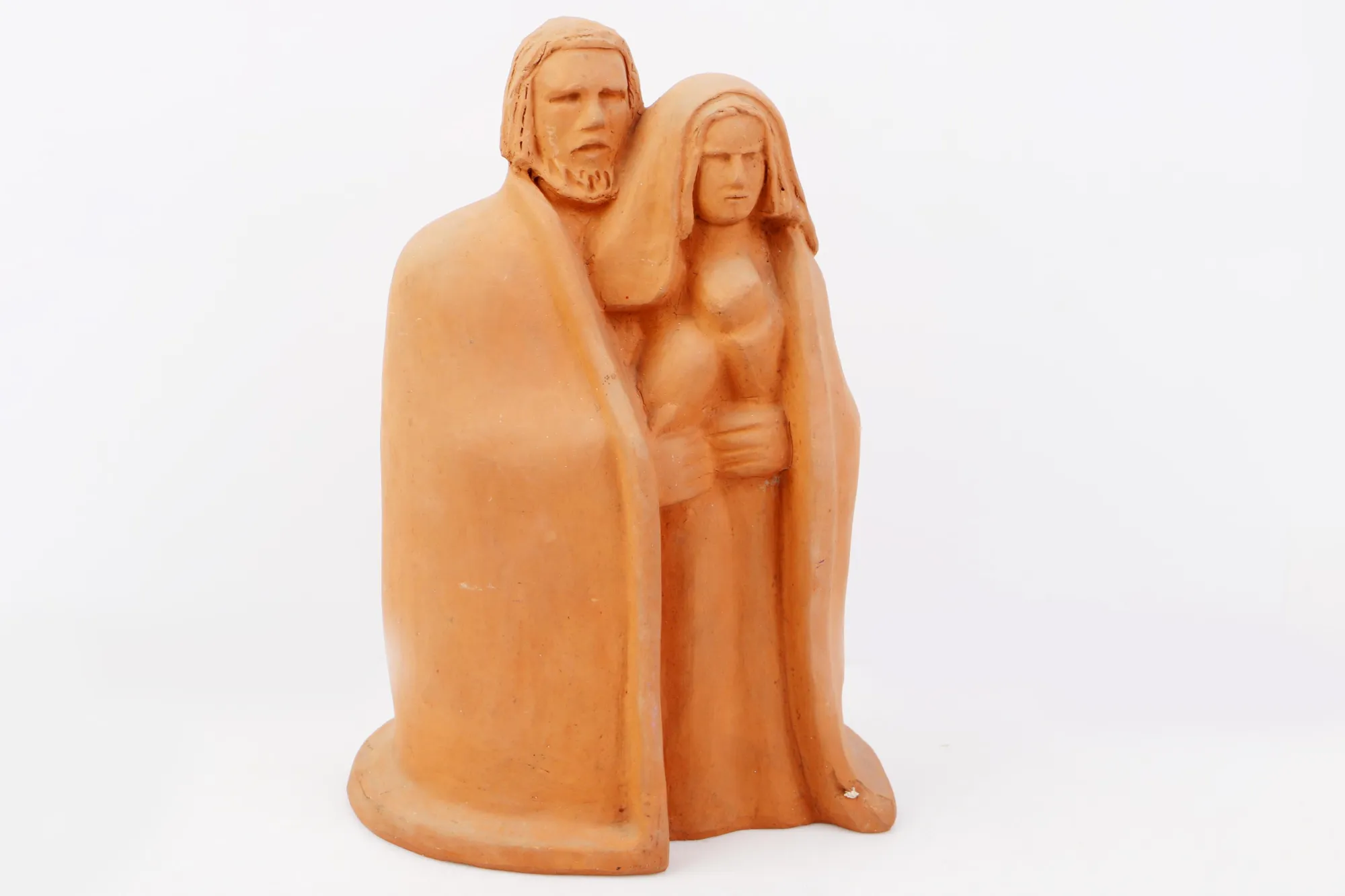
From the 1940s he devoted himself increasingly to ceramics. In 1947 he held his first solo exhibition of ceramics, at the SNI gallery, with unique pieces of a sculptural character in red clay. He exhibited individually and collectively in Lisbon, Porto and at the São Paulo Biennial, and in 1955, as part of the Portuguese representation, received the gold medal at the 1st International Ceramics Festival in Cannes. He made ceramic murals for the Hotel Ritz in Lisbon and the Hotel da Baleeira in Sagres, among other commissions. In 1963 silicosis forced him to give up ceramics.
He then turned to monotype, painting on carved wood, woodcut, watercolour and, once again, sculpture. Between 1958 and 1986 he produced thirty-four artist’s books combining texts, paintings, prints and collages, in a body of work shaped by religious, political and aesthetic reflection, the celebration of women and love, nature and social satire. A journey to Norway and the Lofoten Islands in 1977 gave rise to a remarkable cycle of monotypes.
The Calouste Gulbenkian Foundation, which awarded him a grant in 1966, organised a retrospective of his work in 1972, and in 1991 the National Azulejo Museum presented a retrospective of his ceramics. In 2015 the Modern Art Centre devoted the exhibition "Hein Semke. Um Alemão em Lisboa" to him. In 1990 he was made a Commander of the Order of Prince Henry.
His work is held in the collections of the Calouste Gulbenkian Foundation’s Modern Art Centre and the Museu Nacional de Arte Contemporânea do Chiado. His artist’s books and estate were donated to the Gulbenkian Art Library in 2014.