Mário Cesariny
(1923 - 2006)
Mário Cesariny
Scroll down
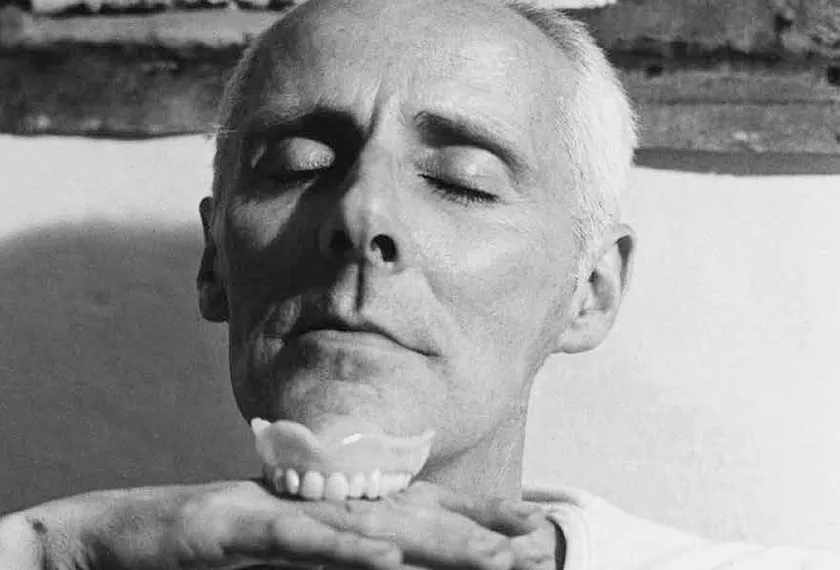
Mário Cesariny de Vasconcelos (1923-2006) was a Portuguese poet, painter, translator and one of the leading figures of Portuguese Surrealism.
Born in Lisbon, Cesariny studied at the António Arroio School of Decorative Arts, where he formed lasting relationships with artists including Cruzeiro Seixas, Fernando de Azevedo, Júlio Pomar, Pedro Oom and Marcelino Vespeira. During this period, he became involved in the artistic and literary circles that would shape the emergence of Surrealism in Portugal.
In 1947, he travelled to Paris, where he met key members of the French Surrealist movement, including André Breton, Victor Brauner and Henri Pastoureau. That same year, he joined the Lisbon Surrealist Group alongside Alexandre O’Neill, António Pedro, José-Augusto França and others. Following disagreements within the group, he became a founding member of the dissident collective Os Surrealistas, which played a central role in the development of Portuguese Surrealism through exhibitions and publications.
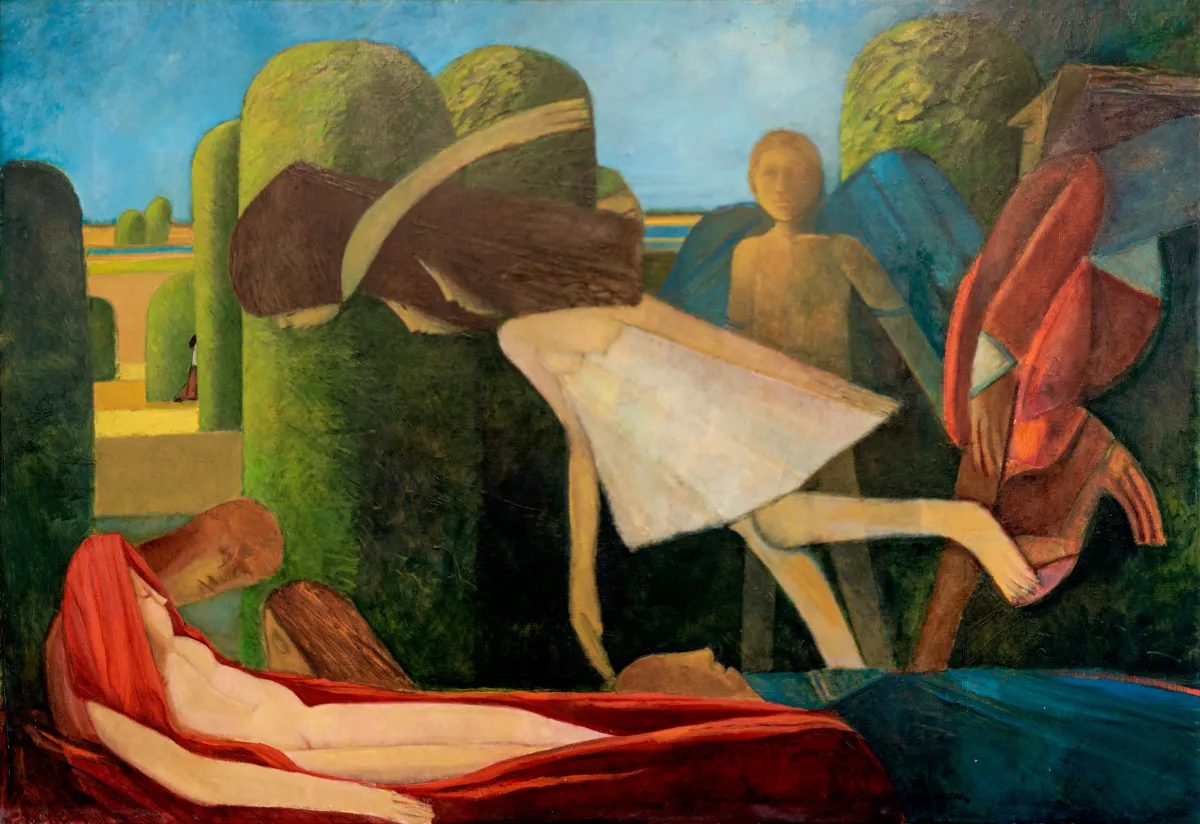
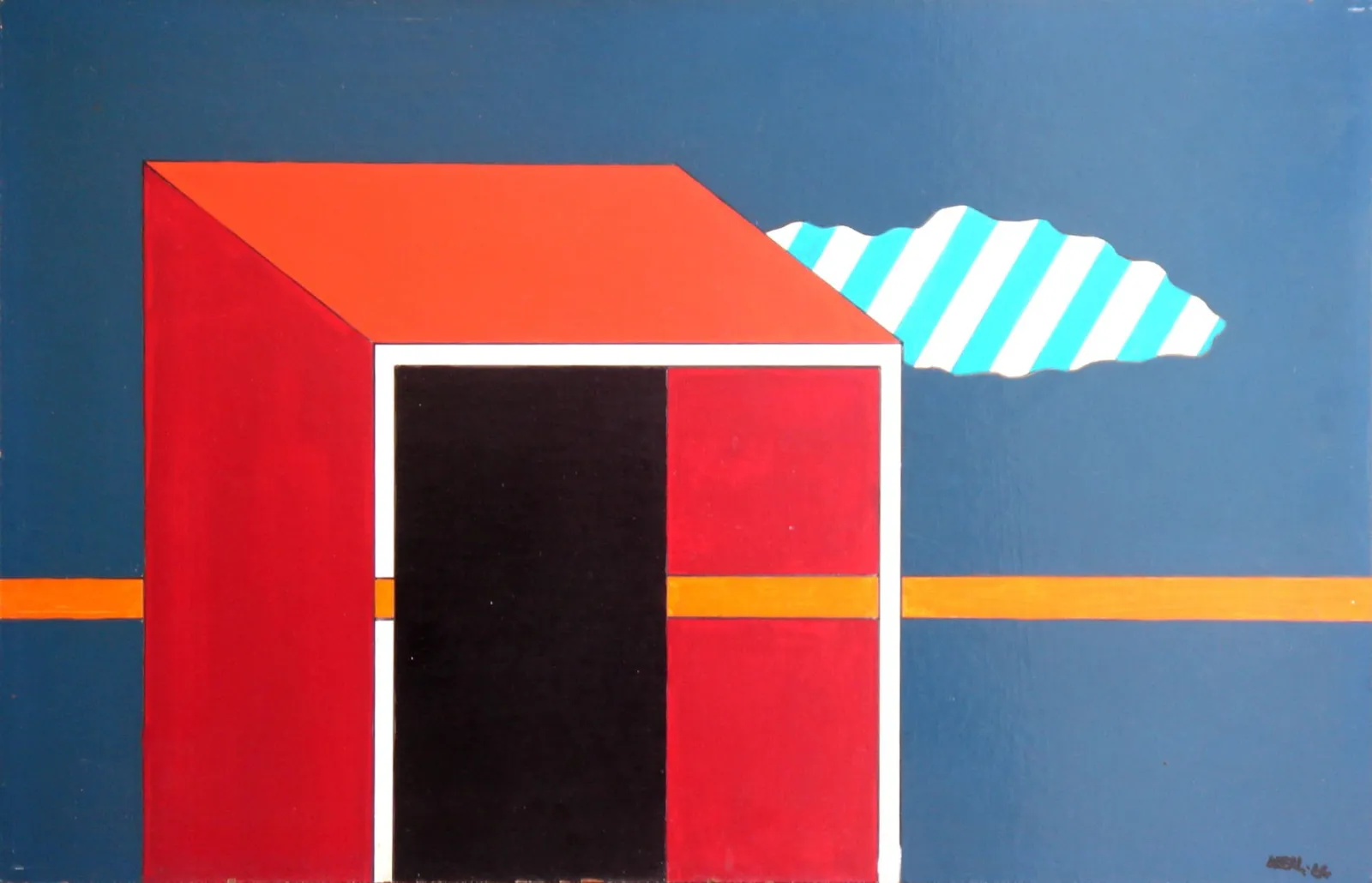
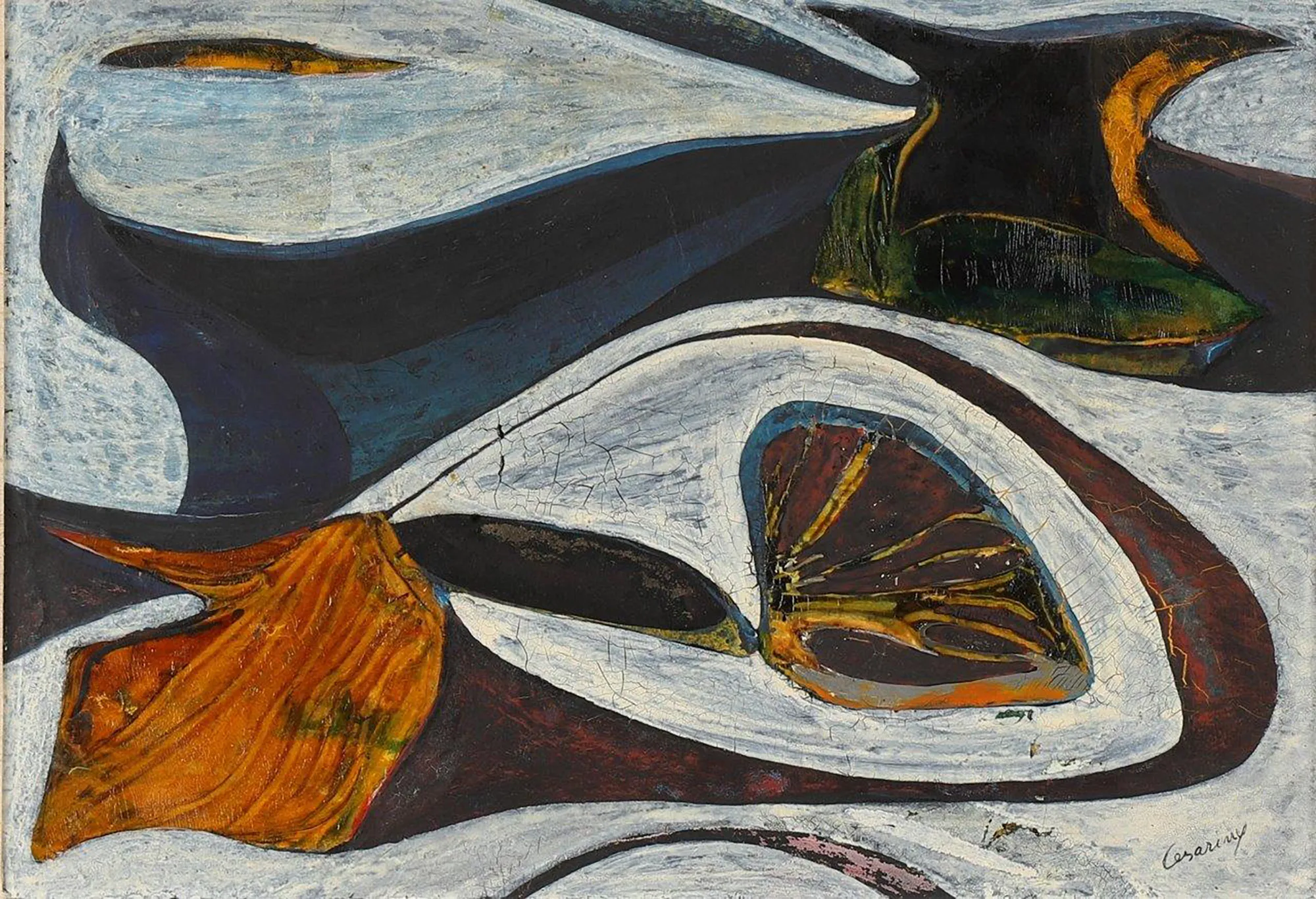
As a visual artist, Cesariny distinguished himself through the exploration of experimental techniques and materials, as well as through a body of work marked by humour, irony, irreverence and poetic invention. Although he later distanced himself from organised Surrealist groups, he remained one of the movement’s most active advocates, promoting exhibitions, fostering international connections and contributing to the visibility of Surrealism in Portugal and abroad.
Alongside his artistic practice, Cesariny developed one of the most significant literary careers in twentieth-century Portuguese culture. His major publications include Corpo Visível (1950), Discurso Sobre a Reabilitação do Real Quotidiano (1952), Louvor e Simplificação de Álvaro de Campos (1953), Manual de Prestidigitação (1956), Pena Capital (1957), Alguns Mitos Maiores e Alguns Mitos Menores Propostos à Circulação Pelo Autor (1958), Antologia do Cadáver-Esquisito (1961), Antologia Surreal/Abjecionismo (1963), A Intervenção Surrealista (1966) and Titânia e a Cidade Queimada (1977).
Throughout his career, Cesariny organised and participated in numerous exhibitions, including Surrealismo e Pintura Fantástica (Lisbon, 1984) and Primeira Exposição do Surrealismo ou Não at Galeria São Mamede, Lisbon (1994).
He was awarded a grant by the Calouste Gulbenkian Foundation and received several distinctions, including the EDP Grand Prize (2002), the Portuguese Writers Association Lifetime Achievement Award, and the Grand Cross of the Order of Liberty.
A significant part of his library, artistic collection and documentary archive was incorporated into the holdings of the Cupertino de Miranda Foundation in Vila Nova de Famalicão through purchases, donations and bequests. Today, Mário Cesariny is recognised as one of the most influential figures in twentieth-century Portuguese culture, whose contributions to both literature and the visual arts continue to shape the understanding of Surrealism in Portugal.
Artworks
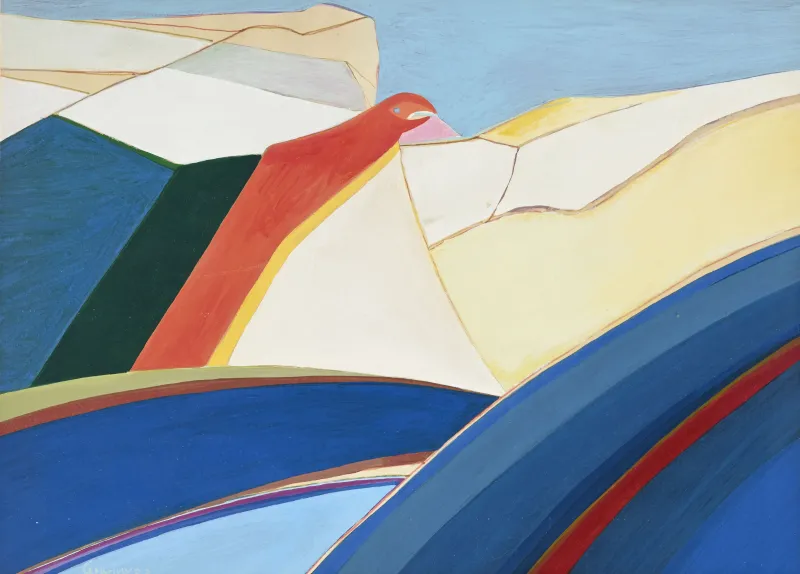
Mário Cesariny
Praia da Almagreira, 1982
29 x 40 cm | Available
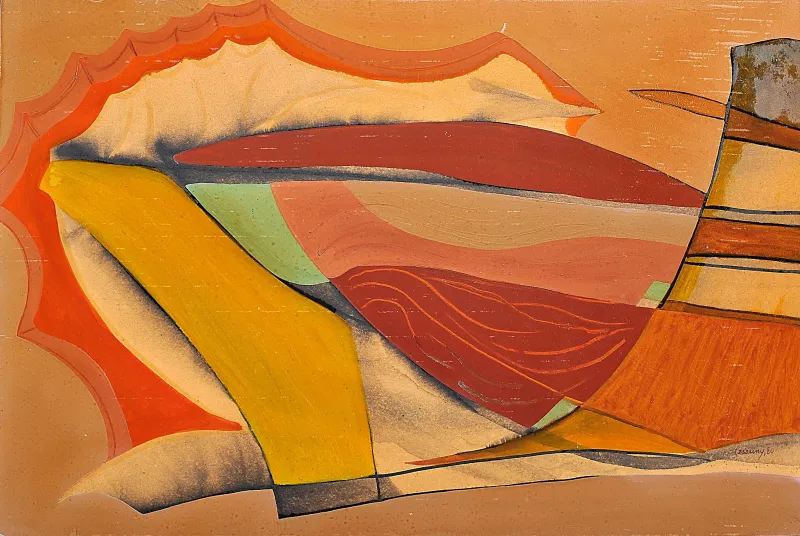
Mário Cesariny
Untitled, 1980
33 x 49 cm | Available
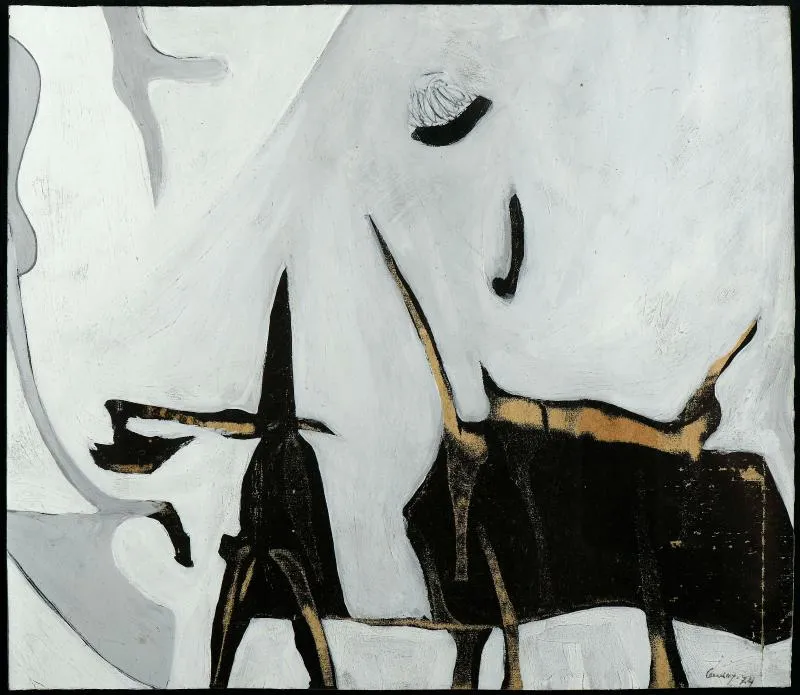
Mário Cesariny
Untitled, 1974
22 x 24 cm | Available
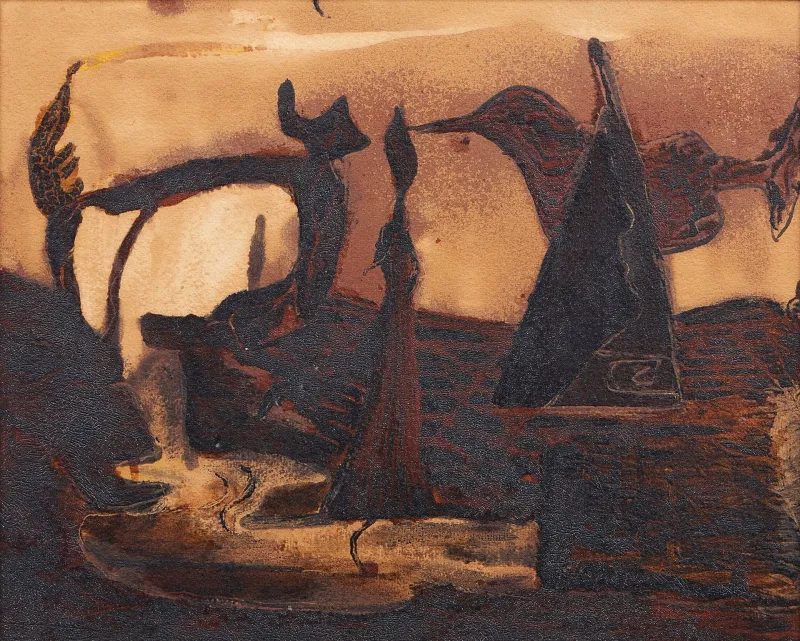
Mário Cesariny
Untitled
36 x 45 cm | Available
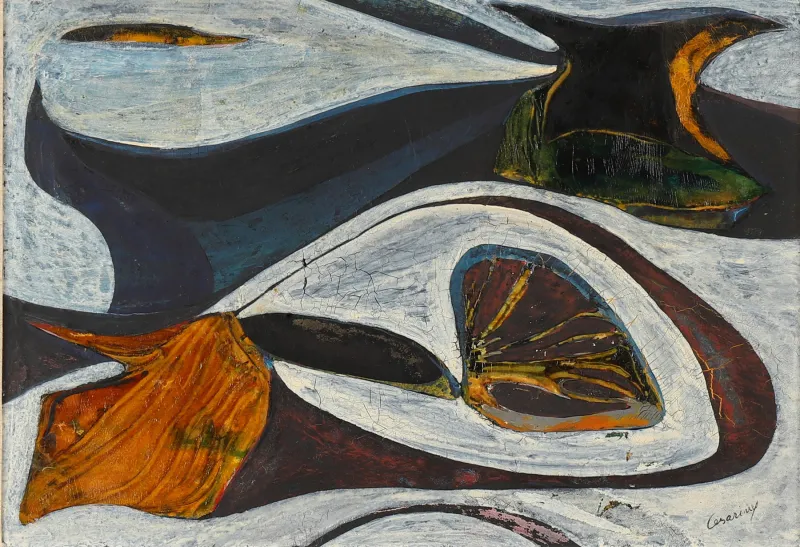
Mário Cesariny
Untitled
27 x 38 cm | Available
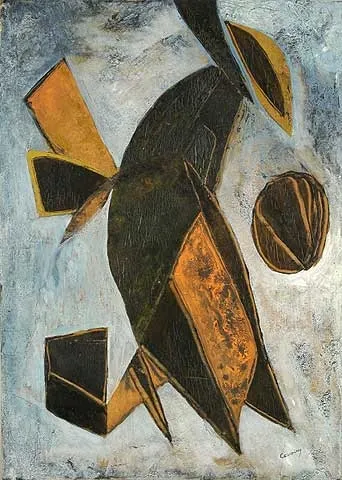
Mário Cesariny
Untitled, c. 1970
35 x 50 cm | Not available
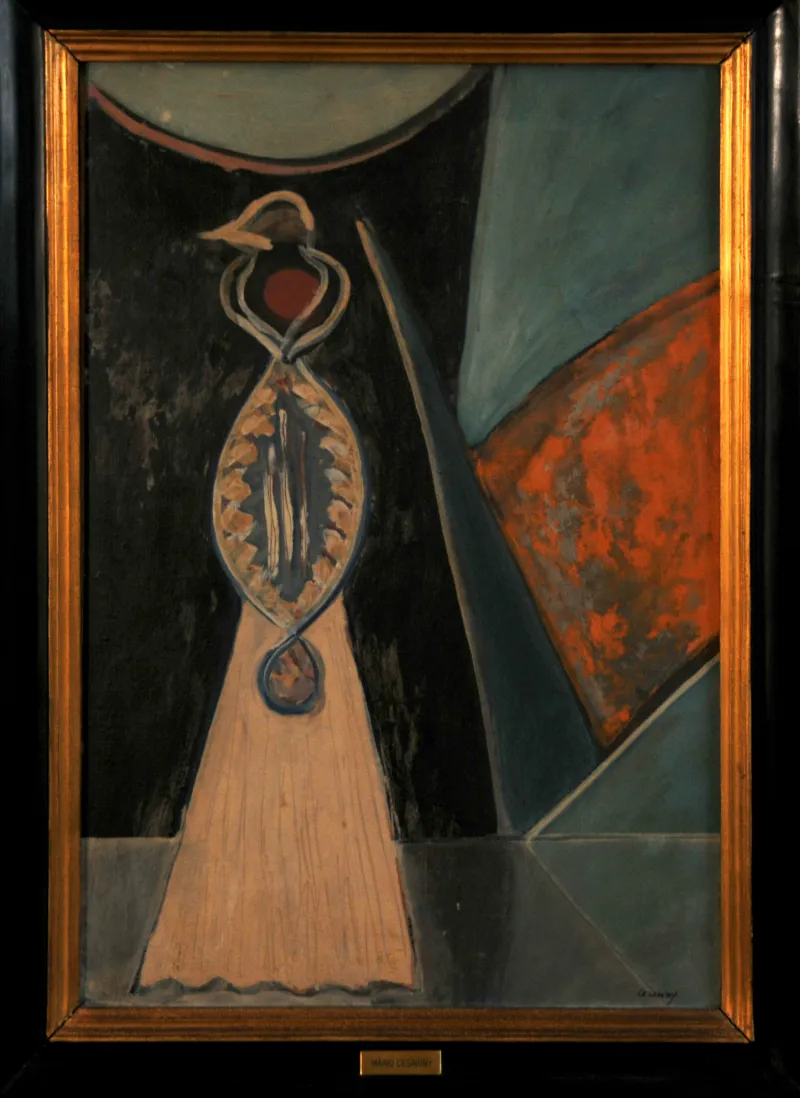
Mário Cesariny
Untitled, c. 1970
41 x 60 cm | Not available