Mário Eloy
Mário Eloy
Scroll down
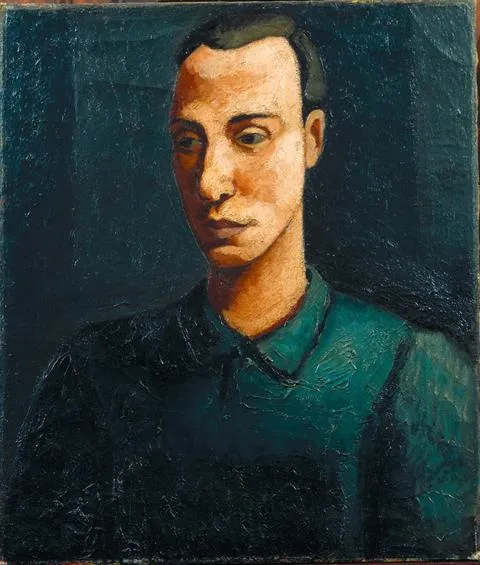
Mário Eloy (Algés, 1900 - Lisbon, 1951) is today recognised as one of the fundamental figures of twentieth-century Portuguese art and one of the most singular personalities of the second Portuguese modernism. Self-taught and profoundly independent, he built an artistic path marked by restlessness, experimentation and a permanent tension between modernity, marginality and personal expression.
After leaving the Escola de Belas-Artes de Lisboa early on, he lived between Lisbon, Paris and Berlin during the 1920s and 1930s, coming into direct contact with the European artistic movements of his time. In Paris he drew close to cubism and expressionism, while his Berlin experience profoundly shaped the psychological and critical intensity of his work. He took an active part in the Portuguese modernist context, maintaining relationships with central figures of culture and the arts, although always from an independent position and frequently at the margins of institutional circuits.
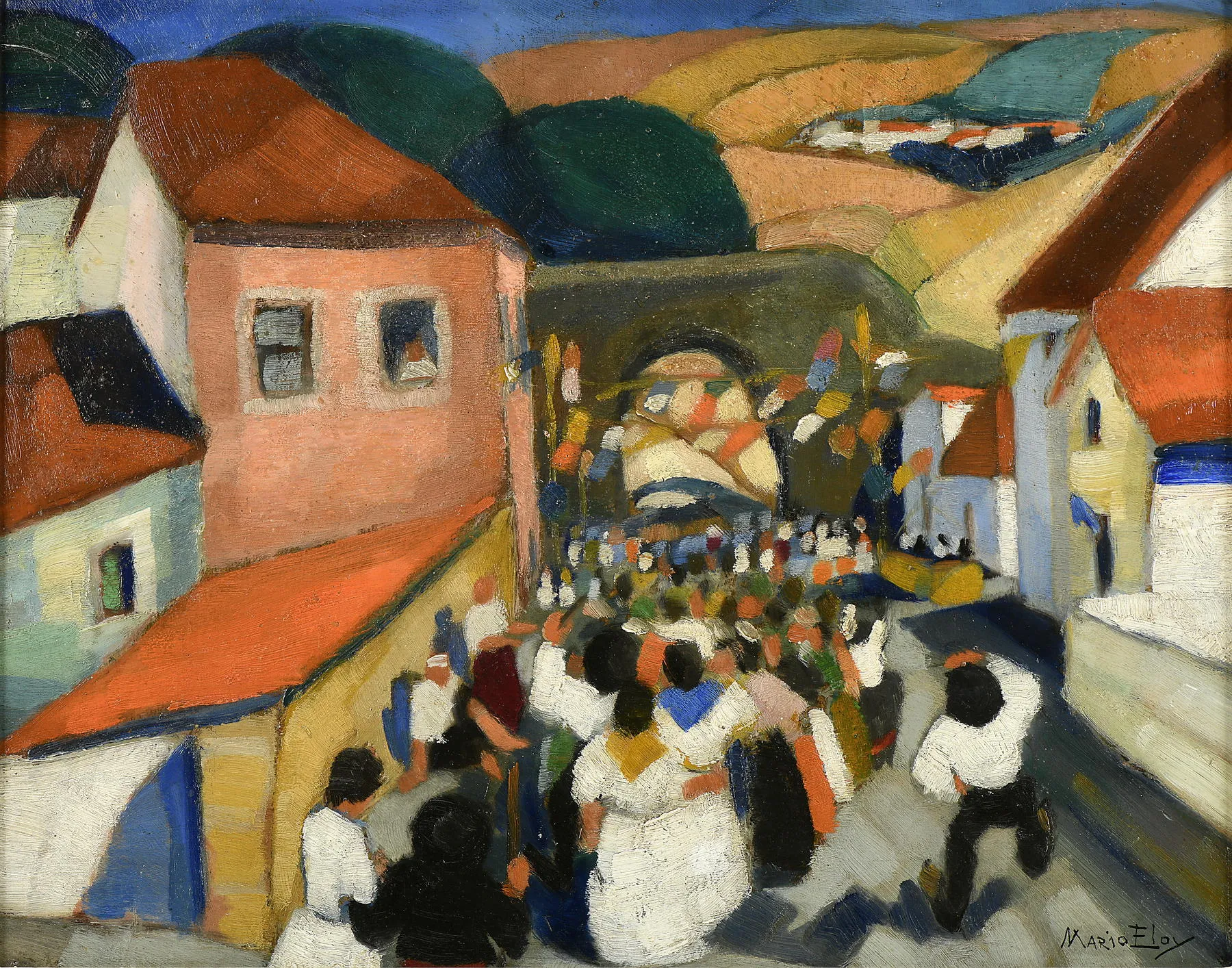
His painting is characterised by an intense expressiveness, by formal deformation and by a strong psychological charge, developing a visual language in which portrait, self-portrait, allegory and figuration coexist with expressionist and, occasionally, abstractionist elements. His subjects range across urban worlds, marginal characters, popular scenes and profoundly subjective visions, revealing a body of work marked by existential restlessness and emotional tension.
From the end of the 1930s, the progression of Huntington's disease and the European political context gave his work an increasingly sombre and visionary tone. The last works reveal a universe peopled by fragmented figures, grotesque images and symbols of decay, making his final output one of the most intense and dramatic of Portuguese modernity.
Although he died without fully knowing the recognition he sought, his work became central to an understanding of Portuguese modern art, and remains today an essential reference for the originality, radicalism and psychological depth of his artistic universe.