Pedro Calapez
(n. 1953)
Pedro Calapez
Scroll down
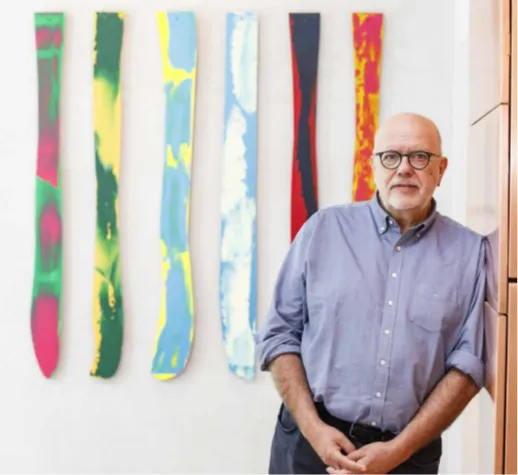
Pedro Calapez was born in Lisbon in 1953. He studied Engineering at the Instituto Superior Técnico while working as a professional photographer. Between 1972 and 1975 he attended the artistic training courses of the Sociedade Nacional de Belas-Artes, continuing his studies at the Escola Superior de Belas-Artes de Lisboa, where he completed his bachelor's degree in 1981.
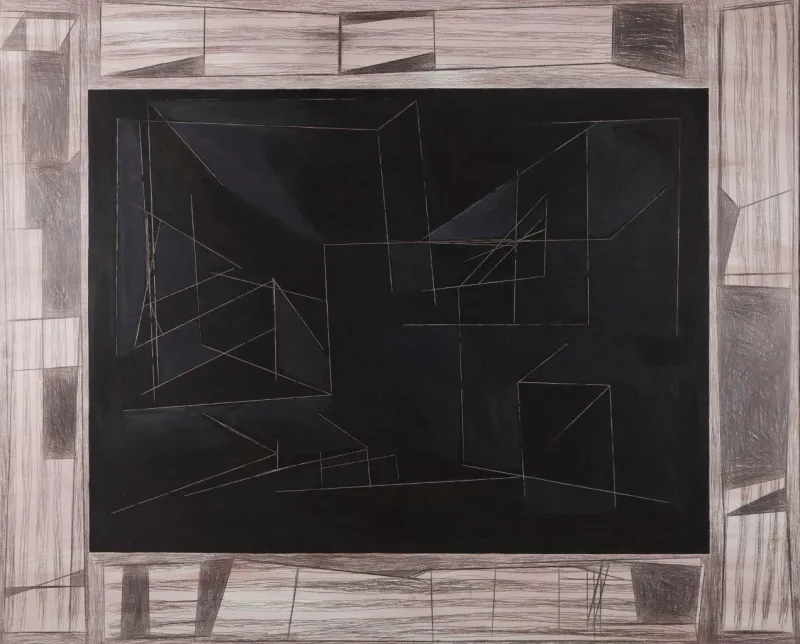
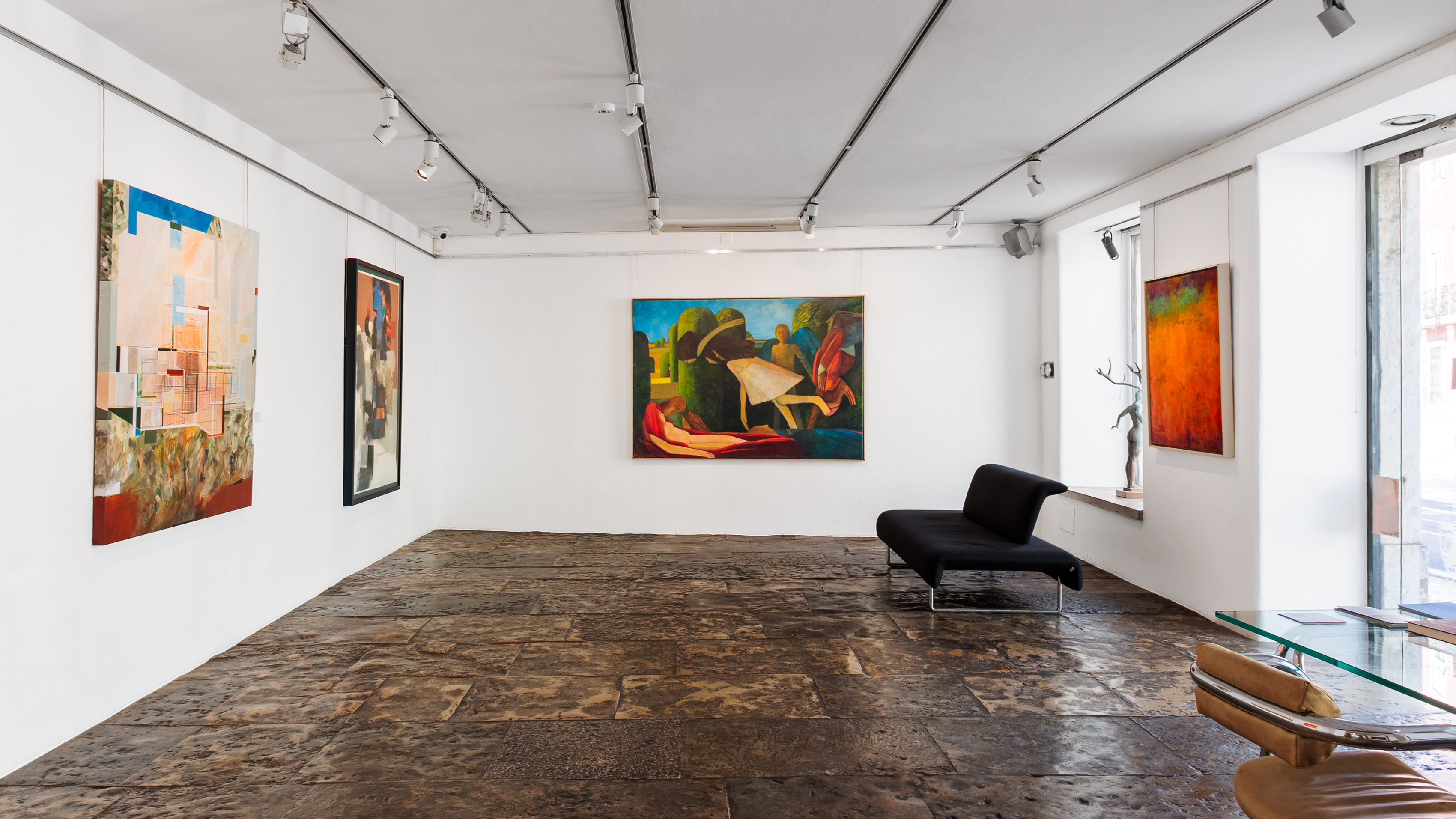
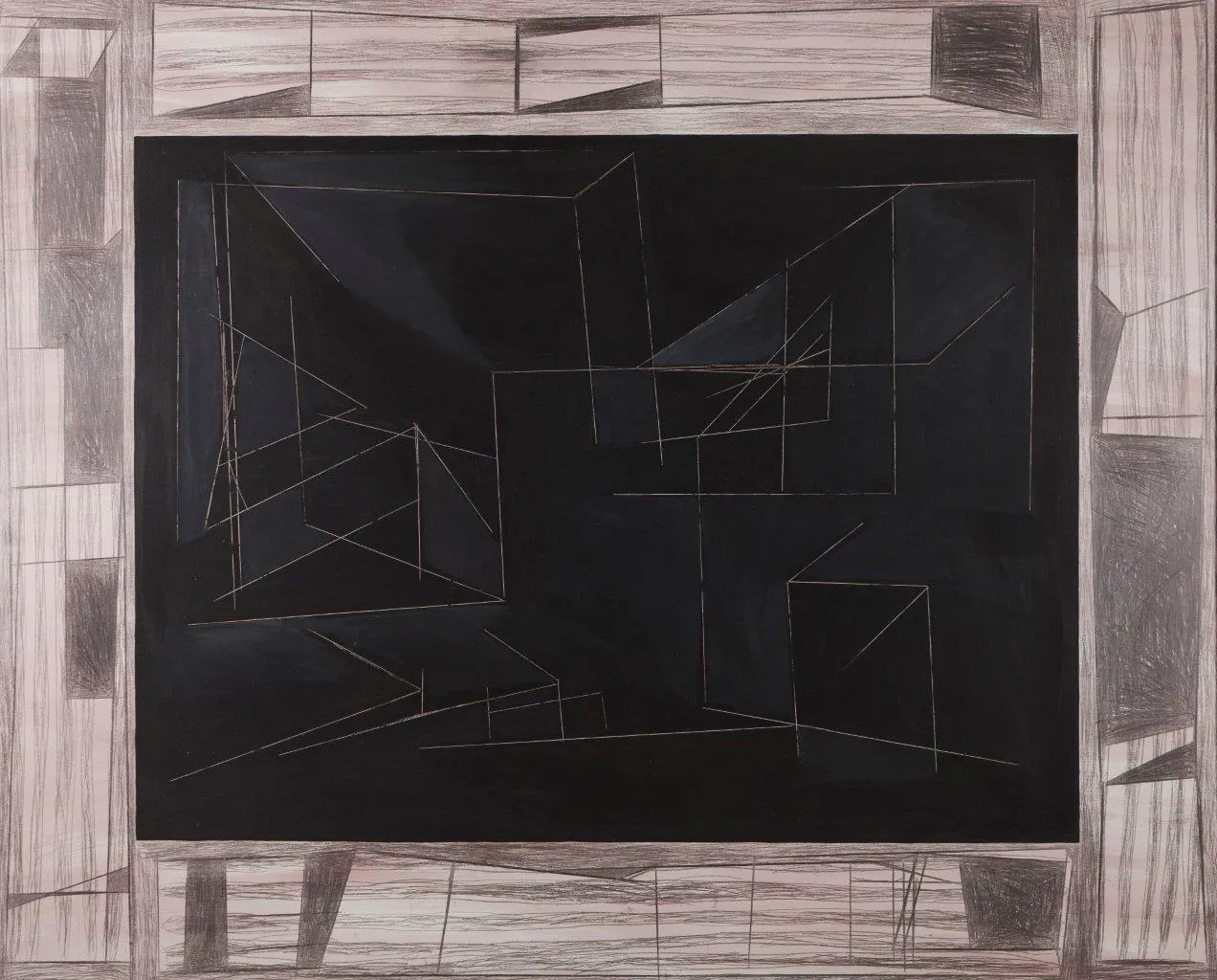
His work develops in the relationship between painting and drawing, with particular attention to matter, colour and the construction of space. He collects and transforms images, taking them out of their original contexts and taking them up again in new compositions. Architecture and landscape are recurrent references in this process. The thick or furrowed surfaces of the painting and the articulation of intense chromatic planes extend into groups of works that occupy the exhibition space, making the viewer's position and movement part of the experience of the works.
He began exhibiting in the mid-1970s and held his first solo exhibition in 1982. The consolidation of his career is associated with shows such as "Depois do Modernismo", in 1983, and "Arquipélago", in 1985, both at the Sociedade Nacional de Belas-Artes. He took part in the Venice Biennale in 1986 and in the 1987 and 1991 editions of the Bienal de São Paulo.
His solo exhibitions include "Memória Involuntária", at the Museu do Chiado, in 1996, "Obras Escolhidas, 1992-2004", at the Centro de Arte Moderna of the Fundação Calouste Gulbenkian, in 2004, "Piso Zero", at the Centro Galego de Arte Contemporánea, in 2005, and "O Segredo da Sombra", at the Fundação Carmona e Costa, in 2016. In 2023 he presented "Deste Espaço Luminoso e Obscuro", organised by the Fundação de Serralves at the Museu de Arte Contemporânea Nadir Afonso in Chaves.
Alongside his artistic activity, he taught at Ar.Co between 1986 and 1998, where he coordinated the Painting and Drawing departments and served on the board. He was also a member of the Cooperativa Diferença and carried out interventions in public spaces.
Among other distinctions, he received the Prémio União Latina in 1990, the Prémio EDP de Pintura in 2001 and the Prémio AICA in 2005. In that last year, the Calcografía Nacional in Spain awarded him its international prize for innovations and contributions to graphic art.
His work is part of public and private collections, including those of the Centro de Arte Moderna of the Fundação Calouste Gulbenkian, the Fundação de Serralves and MACAM.