Rogério Ribeiro
(1930 - 2008)
Rogério Ribeiro
Scroll down
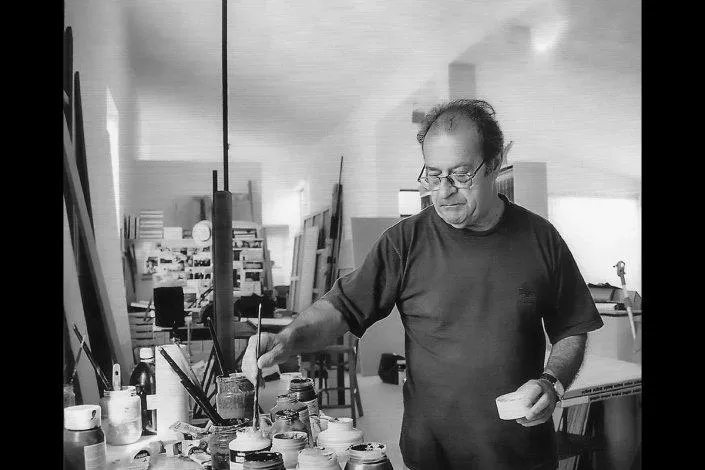
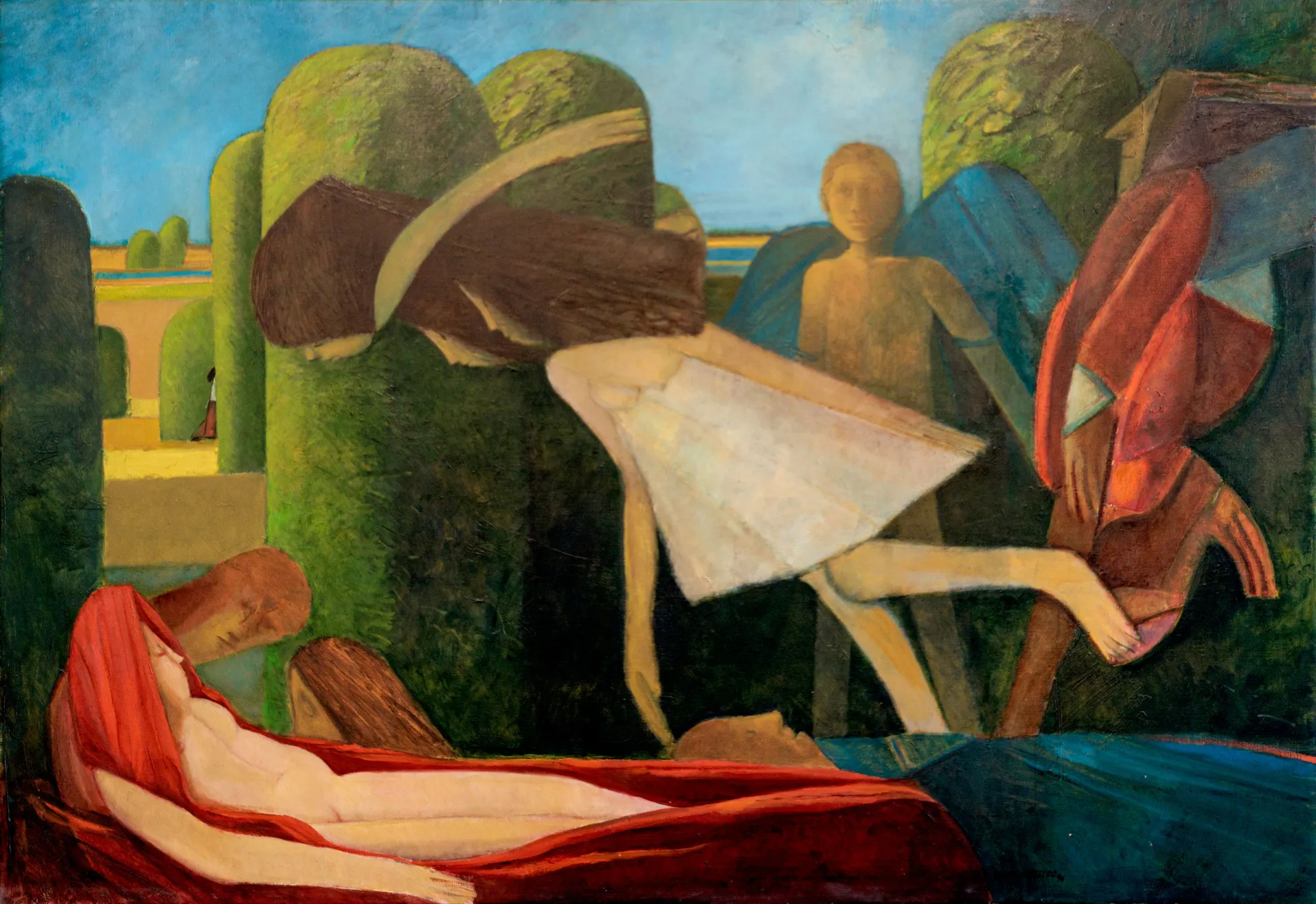
Rogério Ribeiro was born in Estremoz in 1930 and died in Lisbon in 2008. He graduated in Painting from the Escola Superior de Belas-Artes de Lisboa and began exhibiting in the 1950s, taking part in the Exposições Gerais de Artes Plásticas at the Sociedade Nacional de Belas Artes. He held his first solo exhibition in 1955, at the premises of Editora Guimarães.
Associated with neo-realism, he developed a painting attentive to labour, to rural and fishing communities and to the social conditions of his time. His closeness to artists such as Júlio Pomar and Cipriano Dourado marked the early years of his career. His work also passed through a phase of abstract experimentation before returning to figuration, while retaining its concern with human and political reality.
He took part in the I and II Exposição de Artes Plásticas of the Fundação Calouste Gulbenkian, in 1957 and 1961. In "Mondadeiras", of 1961, the search for greater formal freedom is already apparent: the figures become less defined and patches of colour organise the space, while the reference to agricultural labour is preserved.
Alongside painting, he devoted himself to printmaking, tapestry, ceramics, tile work and the graphic arts. He was a founding member of Gravura, Sociedade Cooperativa de Gravadores Portugueses, in 1956. He collaborated with the Tapeçarias de Portalegre and with several architects on the integration of artistic interventions into buildings, notably with Nuno Teotónio Pereira and António Pinto de Freitas at Olivais Norte, in Lisbon.
Teaching accompanied his artistic activity for several decades. He taught at the Escola de Artes Decorativas António Arroio, at the Escola Superior de Belas-Artes de Lisboa and at Ar.Co, contributing to the training of successive generations of artists.
He also played a decisive role in the creation of spaces dedicated to contemporary art. In Almada he was involved in the founding and direction of the Galeria Municipal de Arte and conceived the project for the Casa da Cerca, opened in 1993, of which he was the first director. The recognition of drawing as an autonomous discipline and the meeting of creation, research and education were central principles of this project.
His work is part of various public and private collections, including those of the Centro de Arte Moderna of the Fundação Calouste Gulbenkian, the Museu do Neo-Realismo and MACAM.
Artworks
Exhibitions
No results found.