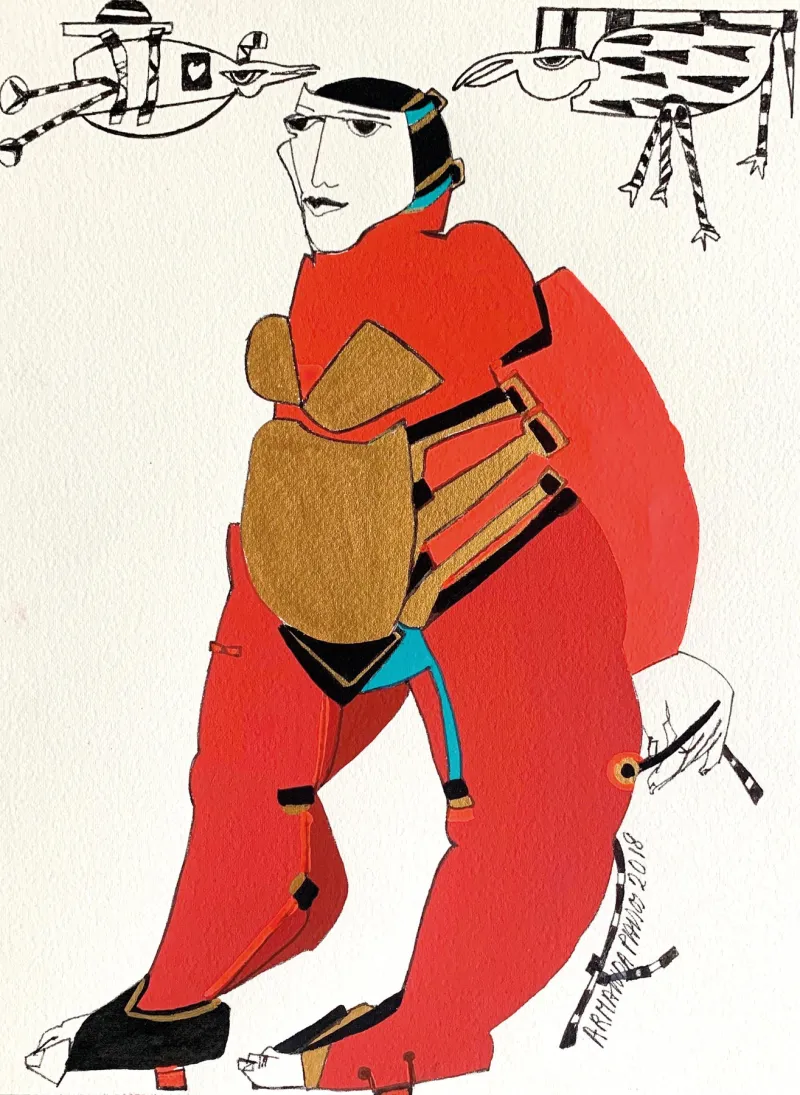
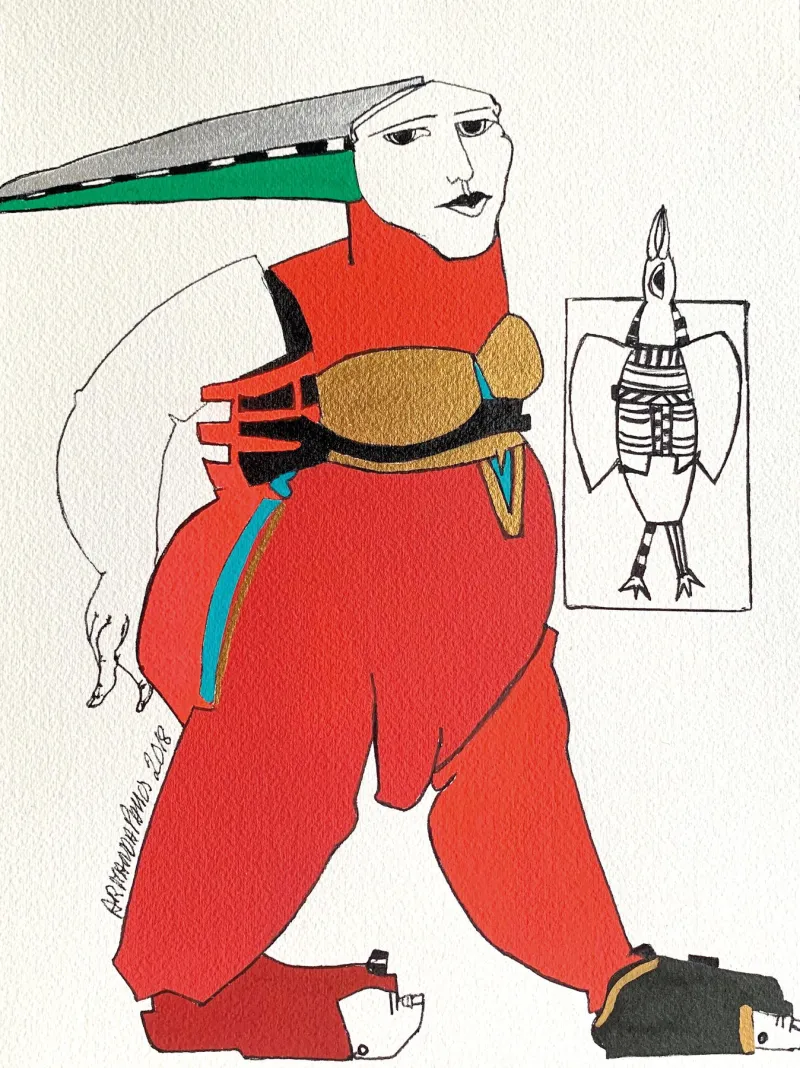
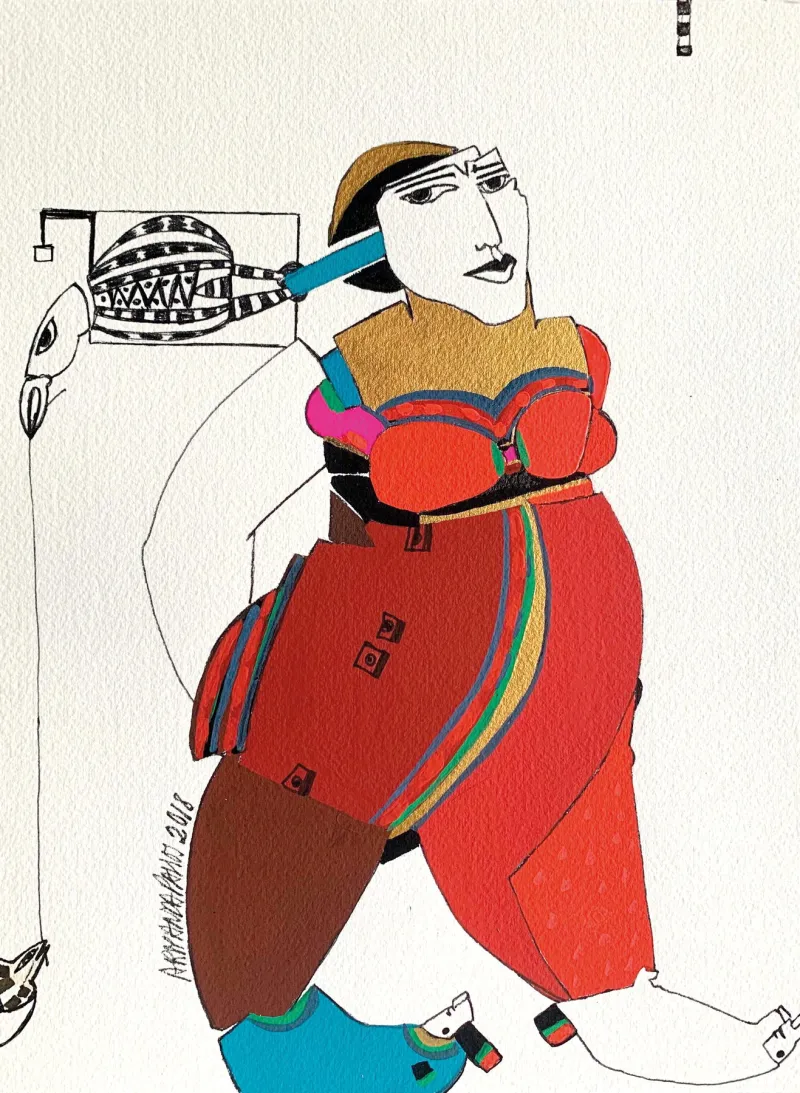
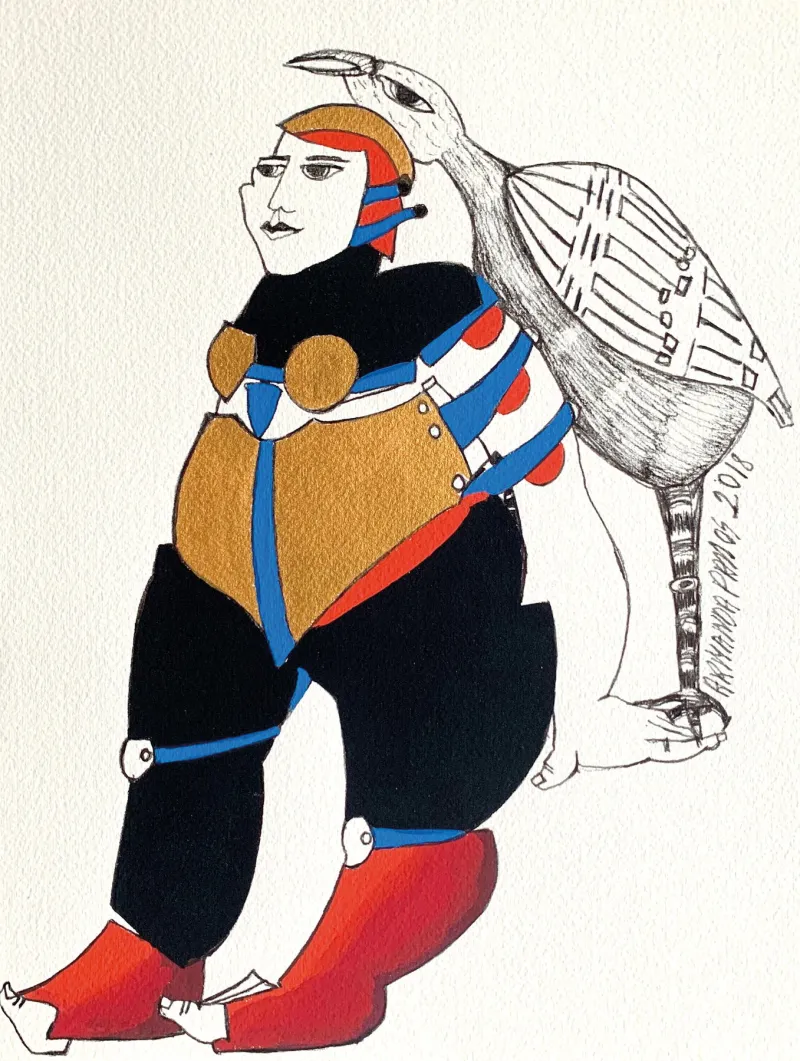
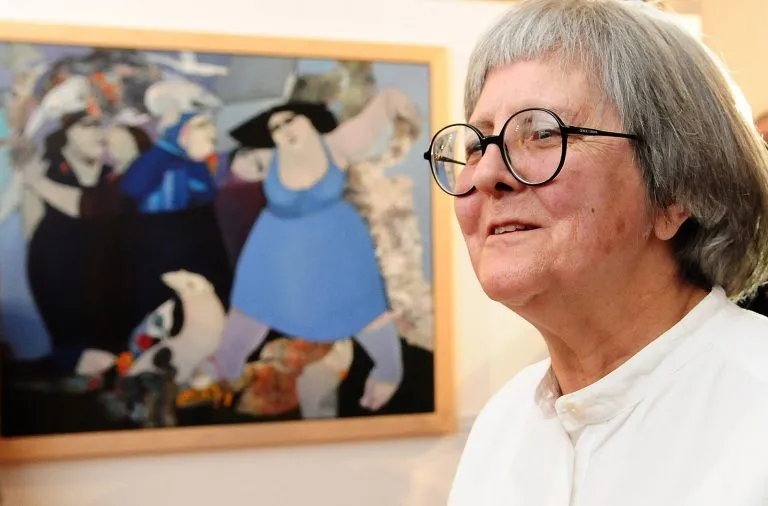
Série Os Outros

Armanda Passos

Série Os Outros

9 May - 18 June 2019 | Lisboa - Politécnica

Scroll down

The Mirror of the Others

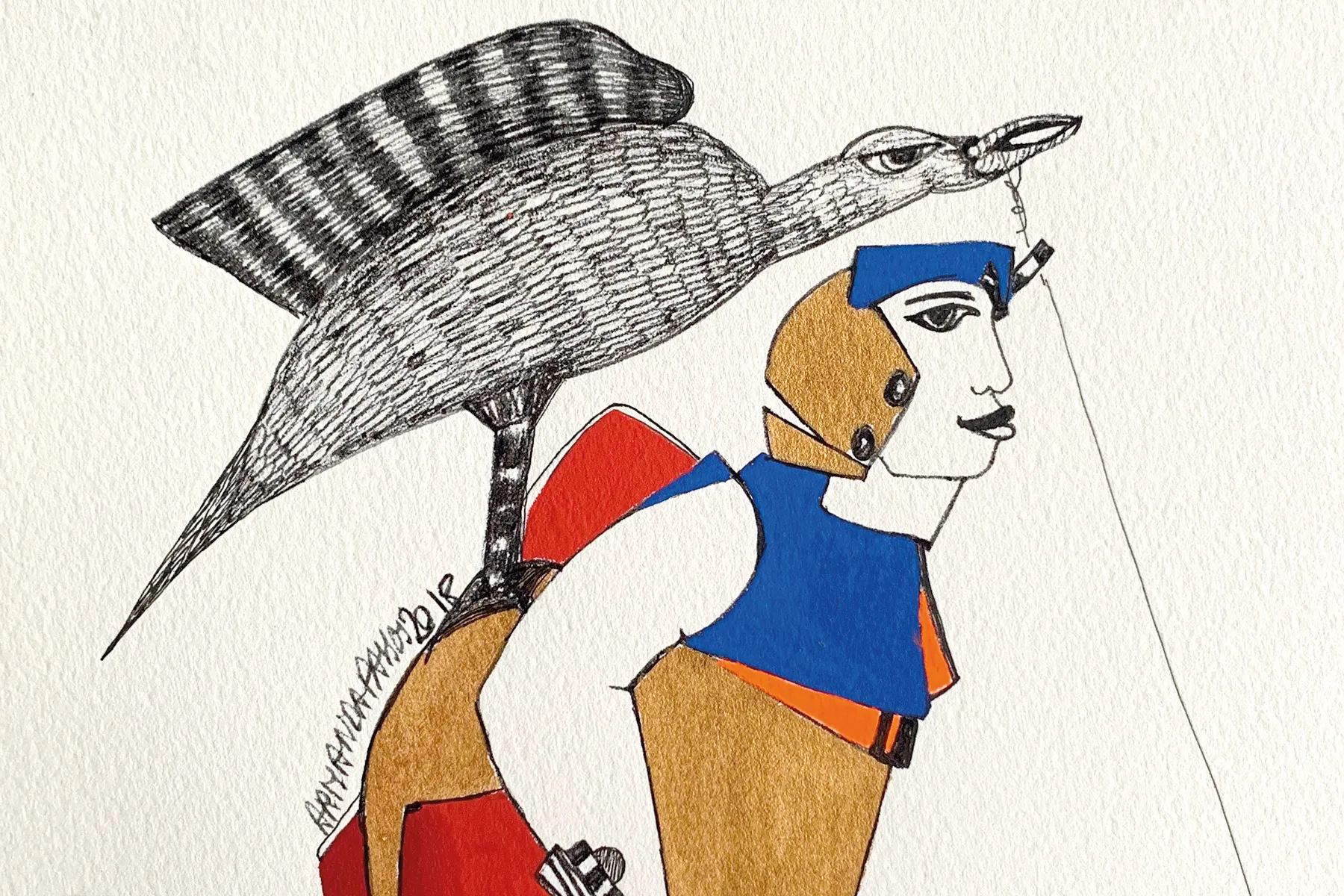
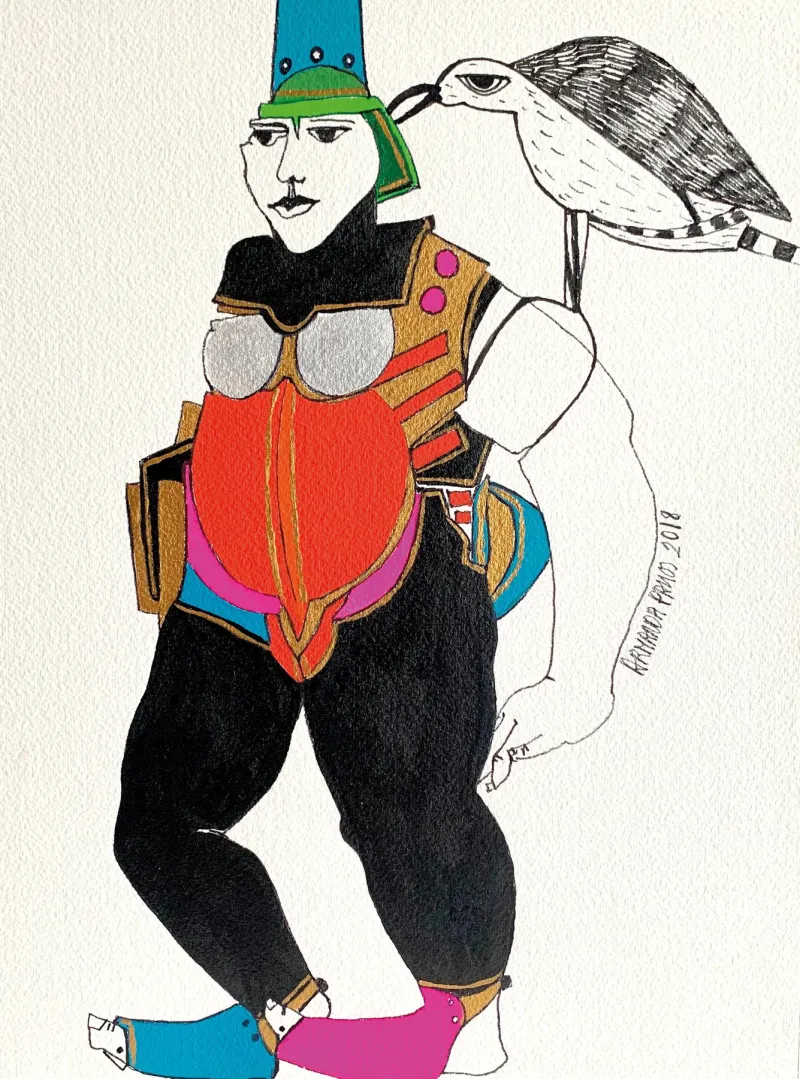
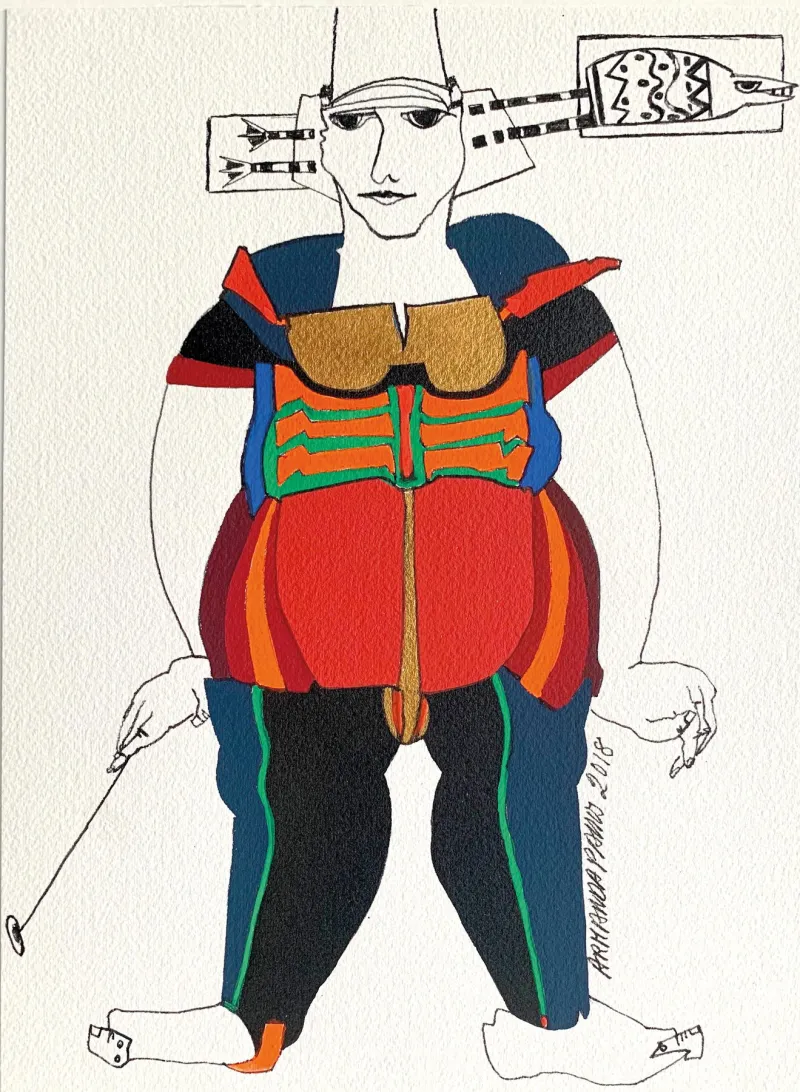
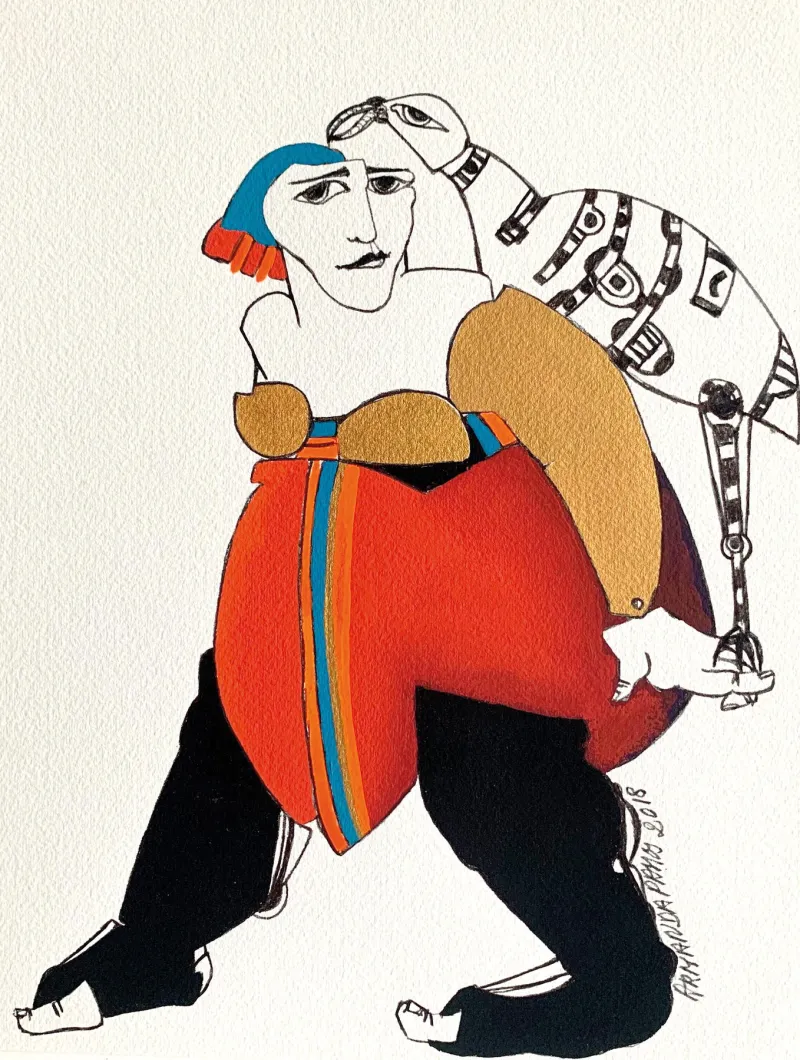
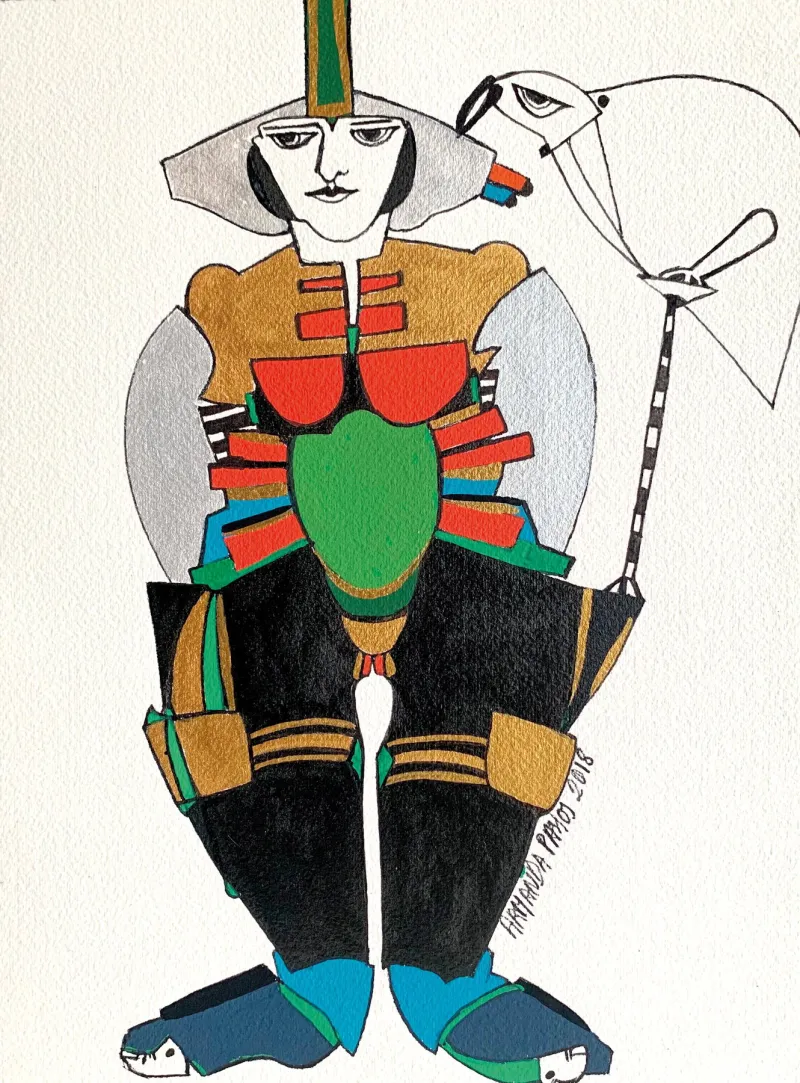
They are a multitude. After seeing for the first time, one after another, the figures that make up this group, my memory mixes them up. To which one does the hat I remember belong? I cannot say; they were introduced to me too quickly. I need to return to each of them and examine it slowly and in detail. I need to compare them with one another.

In doing so, I realise that they propose a code. They are made up of a limited number of elements. The various combinations suggest diversity, but the repetition of elements affirms the internal coherence of a world, a logic to be deciphered. Perhaps it would be possible to detach the arms of one and fit them onto another; perhaps I could try several pairs of legs on one of these characters. Such changes would imply changes of identity, but I have the impression that they would fit together easily enough. The faces themselves seem to have been set in place; they are like masks. So even the faces could be swapped. In that case, clearly, they would be others. If they are now the others, as the title of this body of work indicates, they would become the other others.

In any of these circumstances, I recognise a code and try to interpret it. These are anthropomorphic images; what is being said refers to the human being. Perhaps human subjectivity is comparable to that of colours. Perhaps its objectivity is of the same nature too. What can I understand from these reds? Colours are characters, like letters; they build a language. And the gold? What gold does it refer to?

The stylised clothes are a social convention; they seem to echo a mysterious hierarchy. As if they had different functions, as if they held posts of varying importance. Such organisational sophistication hints at the complexity of the world they come from. At the same time, on the other hand, beyond the faces/masks, the areas of skin they leave uncovered are limited: the arms, the hands, the feet, the neck, the shoulders, sometimes the upper chest. I stare into their wide eyes, looking for answers.

They are androgynous characters, feminine and masculine, stout. With the same ambiguity, their postures define them. At times they hold small objects between their fingers; what might they be? They are minute, small objects, of some use in their world. The shape of the hands is extraordinary; another system of signs?

And the animals that accompany them: a powerful element of these works. They are mostly birds, some snakes, some apparent mammals. The relationship between these animals and the central figures is decisive for the latter; it makes all the difference to how we understand them. I speculate: what if the animals are the materialisation of something invisible? I consider some of them and can imagine them as metaphors: fear, inability, misunderstandings, the past, and so on. The animals are something that exists; we cannot pretend not to see them. Moreover, we have to accept that they float with their wings closed, even if their solid, compact build seems not to allow them to fly.

They occupy a white, timeless space, beyond those constraints. They are a graphic allegory of the human, of the world. What if all these figures refer to a single character, a single being at different moments, seen from multiple perspectives, part of a single story? What if it is me, my reflection, the reflection of each one of us? Clarice Lispector wrote: "Before, I had wanted to be the others in order to know what was not me. I then understood that I had already been the others, and that was easy. My greatest experience would be to be the other of the others: and the other of the others was me."

José Luís Peixoto


Artworks

Bio

Armanda Passos
Armanda Passos

Armanda Passos (1944-2021) was a Portuguese painter born in Peso da Régua, in the Douro region of northern Portugal. She lived and worked in Porto throughout her life.

She graduated in Fine Arts from the School of Fine Arts of Porto (now the Faculty of Fine Arts of the University of Porto), achieving the highest distinction in Painting under the guidance of Júlio Resende. While still a student, she was invited by artist Ângelo de Sousa to work as his assistant. Her first solo exhibition took place in 1976 at the Museum of Aveiro, marking the beginning of a career that would span more than four decades.

Passos exhibited extensively in Portugal and abroad, with notable solo exhibitions including Paintings and Drawings (London, 1989), Ibériques at Galerie du Cygne, Geneva (1993), Reservas at Casa Andresen, Porto, and Obra Gráfica at the University of Porto (2011), presented as part of the University's centenary celebrations. In 2019, the University of Porto hosted Armanda Passos: 75 Years, 75 Writings, a major exhibition marking her seventy-fifth birthday.

She represented Portugal in numerous international exhibitions, including Portuguese Contemporary Artists at the World Trade Center, New York (1985), the 5th Biennial of European Graphic Art, Heidelberg (1988), Intergrafia 91, Katowice, Poland (1992), and exhibitions at the Centre de la Gravure et de l’Image Imprimée, La Louvière, Belgium (1992).

Independent from artistic movements and trends, Passos followed a singular artistic path throughout her career. As writer Lídia Jorge observed in 2022, she “had no model, belonged to no movement, pursued no strategy, and had no purpose other than surrendering herself to the world that inhabited her.”

Her work inspired texts by some of the most important writers, poets and art historians of the Portuguese-speaking world, including José Saramago, Vasco Graça Moura, Urbano Tavares Rodrigues, Eduardo Prado Coelho, António Alçada Baptista, David Mourão-Ferreira, Mário Cláudio, Armando Silva Carvalho, Mia Couto, Raquel Henriques da Silva, Luís de Moura Sobral and José-Augusto França.

Her works are held in major public and private collections, including the Museu Nacional de Arte Contemporânea, the Fundação Calouste Gulbenkian, the Fundação Champalimaud, the Fundação Oriente, the Contemporary Art Collection of the Portuguese State, the Millennium bcp Collection, the University of Porto, the Museu de Serralves, the Museu do Douro, the Portuguese Parliament and the Presidency of the Republic.

In recognition of her contribution to Portuguese culture, Armanda Passos received the Ministry of Culture Prize in 1984 and was awarded the Order of Merit by the President of the Portuguese Republic in 2012. Posthumously, she was honoured as Grand Officer of the Military Order of Saint James of the Sword in 2022.

In 2005, she conceived and built Casa Armanda Passos, designed by architect Álvaro Siza, to house and preserve the collection she assembled throughout her lifetime. Today, Armanda Passos is recognised as one of the most distinctive independent figures in contemporary Portuguese art, leaving behind a body of work that continues to be widely exhibited, studied and collected.